|
|
|
|
F2C |
|
|
|
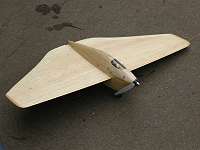
"F2C"
International Racing Class |
|
Racing type competition takes many forms. Some require that a given
amount of fuel is carried, and some require a mandatory number of
fuelling stops.
Internationally, F2C is also known as FAI Team Race. This is the
Formula 1 of control line team racing and requires immense
dedication by the team as well as finely honed skills.
Three
teams fly a race together in one circle. The team who has finished
100 laps first is the winner. The limited tank volume of 7cc allows
for only about 35 laps. So pit stops are required. This is a
challenge for the mechanic to catch the model, refill the tank,
start the engine, and re-launch the airplane as fast as possible.
Models are going over 200 km/h, so both members of the team should
have lightening reflexes. After several qualification rounds the
final is flown over 200 laps.
|
|
|
|
|
Racing events involve the flying of two or more airplanes together
in the same circle. The idea, of course, is to complete a given
number of laps before ones' opponents do. Racing events usually
involves a minimum number of pit stops, where the planes are landed,
refuelled, restarted and relaunched by a second team member
(mechanic). |
|
|
|
|
...... Top of Page |
|
|
|
|
|
|
|
F2C - Rules |
|
|
|
4.3. |
CLASS F2C - TEAM RACING MODEL AIRCRAFT |
|
4.3.1. |
Definition of a Team Racing Event |
| |
a) |
A team racing event is a contest during which eliminating races are
followed by semi-finals races and
a final race, in which three model aircraft participate simultaneously in
each race, flying around the
same circuit, each of them being entered by one team consisting of one
pilot and one mechanic. In
exceptional cases, a race may be run with only two teams. |
| |
b) |
No member of a team may be a member of another team. |
| |
c) |
A race is run over a set number of laps corresponding to the distance
to be covered with at least one
landing for refuelling. The time taken by each model aircraft to cover
that distance after the starting
signal is registered. Team classification will follow the process
indicated in 4.3.10. |
| |
d) |
The eliminating races and the semi-finals races are run over 100 laps,
corresponding to 10 kilometres.
The final race is run over 200 laps, corresponding to 20 km. |
| |
e) |
During the race the pilots remain in the centre of the circuit. Their
only function is to control the model
aircraft. The mechanics are placed outside the flight circle, as defined
in paragraph 4.3.2. Their
function is to start and adjust the motor and to refuel when the model
aircraft is on the ground, and
generally, to deal with the different operations that enable the model
aircraft to race. The motor must
be started by flicking the propeller by hand. |
| |
f) |
During a race, the mechanics must wear a safety helmet, with a
chinstrap, strong enough to withstand
the impact of a flying team racing model aircraft. |
|
4.3.2. |
Team Racing Site
A team racing site must consist of four concentric circles which shall be
marked on the ground: |
| |
a) |
Circle to be used by the mechanics: 19,6 m radius. This is called the
flight circle, and is divided into
six equal 60 degree sectors. At each sector a starting and refuelling
area, one meter in length, shall
be marked on the outside of the flight circle and be known as the "pitting
area". |
| |
b) |
Circle at 19.1 m radius shall be marked with a broken line. It
indicates the point beyond which the
pitman is not permitted to reach to retrieve a model. This is called the
safety circle. |
| |
c) |
Circle to be used by the pilots: radius 3 metres. This is called the
centre circle. The centre of this
circle shall be marked with a white spot of 0,3 m diameter. |
| |
d) |
Circle at 2m radius, and known as the inner circle, shall be marked
with a broken line in a contrasting
colour. |
|
4.3.3. |
Definition of a Team Racing Model Aircraft
Model aircraft in which the propulsion energy is provided by a piston
motor(s) and in which lift is obtained
by aerodynamic forces acting on the supporting surfaces which must remain
fixed in flight except for
control surfaces. The model aircraft must be of a semi-scale type and its
general lines must be similar to
those of a full-size aircraft. |
|
4.3.4. |
Characteristics of a Team Racing Model Aircraft |
| |
a) |
Maximum swept volume of motor(s) : 2,5 cm3
The maximum exhaust outlet area is 60 mm2 at the cylinder liner projected
exhaust outlet or
crankcase exhaust outlet. If a silencer is used the measurement is taken
at the exhaust outlet of the
silencer. The piston face at the exhaust outlet shall not be visible from
the exterior of the model aircraft
when side or front exhaust engines are used. |
| |
b) |
Minimum total projected surface area (St) : 12 dm2 |
| |
c) |
Total maximum weight : 500g |
| |
d) |
Minimum dimensions of the fuselage at the pilot's location: height: 100
mm; width: 50 mm; cross-sectional
area: 39 cm2 - (wing fillets shall not be included in the fuselage
cross-sectional area). |
| |
e) |
The model aircraft must carry a scale pilot head with minimum
dimensions: height: 20 mm; length: 14
mm; width: 14 mm. |
| |
f) |
Minimum diameter of the wheel(s): 25 mm. The use of metal wheels is
forbidden. |
| |
g) |
Maximum fuel permitted: 7 cm3. Only one tank is allowed, to contain
fuel and oil for lubrication. |
| |
h) |
The model aircraft must fly in the anti-clockwise direction. |
| |
i) |
The motor(s) must be entirely enclosed including the cylinder head and
the body of the carburettor
(except the opening of the induction throat). The fairing or additional
extensions to the motor shall be
permitted to be exposed as long as they conform to the natural shape of
the fuselage and do not mar
the semi-scale appearance of the model aircraft. The only parts permitted
to protrude from the
fuselage are those to be manipulated during the operations of starting the
motor, regulating the
mixture, plugs, advance control, compression control, needle valves, tank
fillers, etc. If a silencer is
used, it may be fixed outside the fuselage. |
| |
j) |
Openings for the entry and exit of air, exhaust, etc. may be provided
for proper functioning of the
motor(s). |
| |
k) |
A cockpit or cabin with transparent windshield giving direct visibility
forward must be provided to house
the scale model aircraft pilot head which shall be clearly and fully
visible. |
| |
l) |
The landing gear must be arranged to permit normal take-of and landing.
It may be retractable during
flight but must return to its extended position before landing. |
| |
m) |
The model aircraft must remain in a correct state according to 4.3.4
(a) - (n) throughout the full race,
otherwise it will be disqualified. |
| |
n) |
Fuel tank, tubing and any associated filling valves or shut-off units
must be accessible and capable of
being measured accurately in order to check the total capacity as a unit.
If the organisers do not
consider the system to be accessible or accurately measurable, then the
team will be disqualified. |
| |
o) |
The model aircraft must be equipped with an effective engine-stopping
device for enabling the pilot to
terminate the engine run before the fuel tank is completely empty. |
| |
p) |
Rule B.3.1. of Section 4B does not apply to class F2C. |
|
4.3.5. |
Controls - Technical Verification |
| |
a) |
Line Length: The radius of the flight circle is 15,92 m. It is measured
from the axis of the control handle
to the axis of the propeller for a single motor model aircraft and to the
axis of symmetry for a multimotor
model aircraft. |
| |
b) |
Control System: Two control lines must be used. If constructed of
single steel wire each, these must
be of 0,30 mm minimum diameter with a minus tolerance of 0,011 mm allowed.
If stranded line
construction is used, these shall have a minimum of three strands and all
strands shall be of equal
diameter and the stranded combination shall have a minimum width of 0,34
mm with no minus
tolerance allowed. In all cases the lines shall be measured using a
suitable instrument with measuring
surface diameters of 5 mm minimum and 8 mm maximum. Before every race a
load test shall be
applied to the assembled control lines and the model aircraft in flying
order equal to 30 times the
gravity force, to a maximum of pull 140 N. The control handle must be
built so that the distance
between the axis of the handle and the points of flexibility of the two
cables does not exceed 40 mm.
No intentional twisting and/or linking of the two lines together shall be
permitted between the point of
exit of the model aircraft and a point 300 mm from the handle. The use of
flexible grouper(s) attached
to the wing tip and extending a maximum of 2 cm is permitted. |
| |
c) |
Fuel Tanks: The fuel tank capacity is checked through the use of an
accurate system by visual
examination of the volume of the fuel put into the tank and pipes. Control
is to be made before the
contest and may be made after each race in addition to a verification
after the final race. |
| |
d) |
If the engine has an integral head or extremely tight fitted piston
liner assembly, the entrant must
provide tooling to allow the piston connecting rod & shaft assembly to be
rotated through 360
degrees. A dummy cylinder would be ideal. |
|
4.3.6. |
Organisation of Races |
| |
a) |
Three competing teams (in exceptions only two) will fly simultaneously
in each race after having been
drawn for order. Qualifying races with less than 3 teams will be put at
the end of the draw, in order to
allow a three-team races with teams which have been granted an attempt. |
| |
b) |
The draw is organised in such a way that, when possible, only one team
of any nation may participate
in an eliminating race or semi-final race. |
| |
c) |
When it is not possible to organise a reflight for a team which has
been granted an attempt, the F2C
panel of judges will ask for volunteers (from different countries in the
case of World Championships
and Continental Championships) to fill the qualifying race. The F2C panel
of judges will organise an
appropriate draw for the race among the volunteers and the team with the
attempt. If there are no
volunteers, the team will be allowed to fly alone to complete their
qualifying reflight during the same
round. |
| |
d) |
The teams may be allowed to run their motors just before entering the
circle under the organiser's
supervision so the running does not interfere with the starting procedure
of a race. Mechanics are not
allowed to walk with a running engine. |
| |
e) |
A pitting area (4.3.2.(a)) is occupied by each of the model aircraft
which are to participate in a race.
The model aircraft of the team designated first during the draw occupies
the place chosen by that
team. The other teams choose one of the remaining free pitting areas in
order of the draw. The chosen
pitting areas are considered occupied until the race is finished.
For the final race, the choice of the pitting areas shall be according to
the results in the semi-finals.
The team with the fastest time chooses first, the team with the second
fastest time chooses next, etc.
In case of a tie the teams' second fastest times in the semi-finals will
decide the order of choice. |
| |
f) |
After entry to the circuit, it is forbidden to start a motor before the
first signal has been given by the
Circle Marshal, unless allowed by the Circle-Marshal. |
|
4.3.7. |
Race from Start to Finish |
| |
a) |
Three timekeepers are assigned to each team. They stand outside the
flight circle, near the pitting
area of the model aircraft that they control. They are in charge of the
timekeeping and lap counting for
their particular team. |
| |
b) |
A first signal given by the Circle Marshal authorises the mechanics to
proceed with the warming up to
the motor(s), during 90 seconds. A second signal (visual and acoustic)
announces the end of the
warming up period and orders the mechanics to stop motors. |
| |
c) |
A period of 30 seconds is allowed for final preparations (filling up
the tanks) and the Circle Marshal
announces the last five seconds by reverse counting. |
| |
d) |
The starting signal is given by the Circle Marshal through a visual
signal (flag) and a sound signal. For
the last 3 seconds of the countdown and at the starting signal the
mechanics must be standing erect
close to their model aircraft and the pilots must be crouching on the
border of the centre circle, with
one hand touching the ground and with their control handles as close to
the ground as defined by the
F2C panel of judges. The starting signal must be "sharp" to enable
accurate timing. |
| |
e) |
Model aircraft must fly at a normal height of between two and three
metres, except for overtaking,
taking off or landing. |
| |
f) |
Pilots must keep their controlling hand and the model aircraft on a
plane perpendicular to a line joining
their shoulders and passing through the centre line of their body, pilots
must also keep their controlling
hand on the vertical line between the middle of the chest and the top of
the forehead, except when
overtaking, taking off and landing when an exception of three laps is
allowed. |
| |
g) |
Overtaking must be done by overflying. The model aircraft is not in any
case allowed to fly over six
metres height when overtaking. The pilot being overtaken must on no
account carry out any
manoeuvre to impede the overtaking competitor and must leave space for the
overtaking pilot when
the overtaking is finished.
 |
| |
h) |
The model aircraft is allowed to fly a maximum of two laps without the
motor running. |
| |
i) |
Landings take place inside the flight circle. |
| |
j) |
The model aircraft must touch the ground with its motor stopped before
the mechanic is allowed to
catch it. |
| |
k) |
After the mechanic has caught the model aircraft, he must go to the
nearest free pitting area from the
point at which the model aircraft was stopped. A pitting area is occupied
if a mechanic is standing at
such an area, even if his team's model aircraft is still in the air. |
| |
l) |
After the mechanic has caught the model aircraft, but only then, the
pilot is allowed to put one foot
outside the centre circle. |
| |
m) |
During the refuelling and the restart of the motor, and until the time
when he releases the model
aircraft, the mechanic must keep the model aircraft in contact with the
ground by at least one point and
with the centre line outside the flight circle. During that time the pilot
must be crouching or sitting inside
the centre circle. He keeps one hand on the ground and his handle and his
lines as close to the ground
as defined by the F2C panel of judges until the model aircraft starts
again. |
| |
n) |
The race ends when the number of laps completing the required distance
has been covered by all the
competing model aircraft or, when the official time limit has been
reached, which is fixed at 10 minutes
for an eliminating race or a semi-final race and at 15 minutes for the
final race. |
| |
o) |
When the model aircraft has finished the race or when it cannot
continue after a stop, its pilot must sit
down or crouch outside the centre circle as long as the other competitors
are still engaged in the
race, unless the Circle Marshal allows him to leave the circle earlier. |
|
4.3.8. |
Definition of an Official Flight
An official flight is recorded for every participant in any race not
granted an attempt.
Attempts are granted as follows: |
| |
a) |
Any team in an eliminating race or a semi-final race which has been
interrupted through an obstruction
or collision for which it was not responsible shall be granted an attempt. |
| |
b) |
In a final race which has been interrupted through an obstruction or
collision before any of the
participants has completed 100 laps the final shall be stopped and all
competitors, except any who
have at the point of stoppage of the race been disqualified, shall be
granted an attempt. |
| |
c) |
If, before 50 laps of an eliminating race or a semi-final race have
been completed by any of the teams
who started the race, only one team remains in the running and flying
alone, the race will be declared
void and considered an attempt for the remaining team. A team which has
been granted an attempt is
allowed to participate in another race. |
|
4.3.9. |
Warnings - Eliminations
At each warning the chief judge shall notify the team manager concerned so
that, in turn, he may convey
the reason of the warning to the mechanic. In the event of any serious
breach of the rules, the F2C panel
of judges may eliminate the team from the race.
A TEAM SHALL BE WARNED: |
| |
a) |
If a pilot interferes with or obstructs another pilot either by his
conduct in the circle (for example by
raising the handle above his head during take-off), or by a manoeuvre of
his model aircraft preventing
another model aircraft from flying or landing normally. |
| |
b) |
If a pilot, instead of walking around the centre, stands in the same
place or walks backwards or
continuously keeps the centre spot of the circle between him and the model
aircraft. |
| |
c) |
If the pilot's flying style does not conform to 4.3.7.f). |
| |
d) |
If a pilot applies physical effort to increase the speed of his model
aircraft during the official flight. |
| |
e) |
If the height level of the flight prescribed by the rules is exceeded. |
| |
f) |
If, during the start of the race or during the pit stops, one hand is
not on the ground, the control handle,
the lines and the model aircraft are not as close to the ground as defined
by the F2C panel of judges
and/or the centre line of the model aircraft is inside the flight circle. |
| |
g) |
If a mechanic services the model aircraft outside the designated
pitting area. |
| |
h) |
If the pilot does not leave space for an overtaking pilot when the
overtaking is finished. |
| |
i) |
For any other flagrant breach of the rules. |
| |
A TEAM SHALL BE ELIMINATED FROM A RACE: |
| |
j) |
If the pilot steps outside the centre circle before the mechanic has
taken hold of the landing model
aircraft, and/or the pilot does not act in accordance with rule 4.3.7.i)
and m). |
| |
k) |
If the mechanic steps into the flight circle (with either foot) or
reaches further than the safety circle
(line) painted 0.5m into the flight circle. |
| |
l) |
If the mechanic retrieves his model aircraft by any device. |
| |
m) |
If overtaking is done by passing under the slower model aircraft. |
| |
n) |
If the pilot whose model aircraft is to be overtaken carries out any
manoeuvres to impede the
overtaking competitor. |
| |
o) |
If a member of the team or the model aircraft causes a collision. |
| |
p) |
If jettisoning occurs or if the model aircraft is not in the condition
as stated in 4.3.4.a). to l). |
| |
q) |
If the model aircraft flies more than two laps with the motor stopped. |
| |
r) |
If the model aircraft is recovered with the motor running or prior to
touch down with the motor stopped. |
| |
s) |
If, after its model aircraft have been processed, the competing team
has used parts or elements not
checked during the control; if the team has modified its model aircraft(s)
by changing the
characteristics or specifications imposed by the rules this may lead to
the application of penalties as
stated in the General Section of the Sporting Code. |
| |
t) |
If the mechanic does not act according to 4.3.7.k) and l). |
| |
u) |
If the team has accumulated three warnable offences during the
eliminating or semi-final race (100
laps). |
| |
v) |
If in the final (200 laps) the team has accumulated four warnable
offences. |
|
4.3.10. |
Team Qualification and Classification |
| |
a) |
Each competing team must take part in at least one eliminating race to
qualify for the semi-finals.
The contests will be organised on three eliminating races and if there are
no semi-finalists then all
teams are allowed four eliminating races. |
| |
b) |
The number of teams qualifying for the semi-finals will depend upon the
total number of teams entered
in the competition. Each qualifying team may take part in two semi-final
races. |
| |
|
Number of teams
2 up to and including 8
9 up to and including 11
12 up to and including 39
40 or greater |
Number of semi-finalists
0
6
9
12 |
| |
|
The 6, 9 or 12 teams which register the 6, 9 or 12 best times respectively
during the eliminating races qualify for the semi-finals. |
| |
c) |
There is a tie between some teams when their best times in any single
eliminating race are equal and
also between their second best (and so forth in case of three flights). If
there still exists a tie between
some teams, new eliminating race(s) will be organised between these teams
until an adequate
number of teams is qualified. In that case, departure will be made by an
individual draw. |
| |
d) |
This system for the elimination of ties will only be enforced if more
the number of semi-finalists (6, 9 or
12, depending on the total number of teams entered in the competition)
qualify for the semi-finals. |
| |
e) |
The three teams having registered the three best times during the
semi-finals qualify for the final race.
In the case that no semi-final flights have taken place, the three teams
having registered the three best
times during the eliminating races qualify for the final race.
All semi-final races will take place between three teams. Where this
cannot be achieved either by
withdrawal or in re-flights, then the number will be made up by bringing
forward the tenth placed team
(seventh or thirteenth in case of 6 or 12 semi-finalists) and so on as
necessary. Those teams will not
be granted an attempt but any recorded flight(s) shall be eligible to
qualify for the final race. |
| |
f) |
In case of a tie amongst the semi-finalists during the semi-finals, the
regulations (b), (c) and (d) will be
applied, based on the semi-final results, the number 6, 9 or 12 being
reduced to three.
The competing teams which have participated in the final race will be
placed at the head of the
classification, only taking into account the times of flights during the
final race, after checking tank
capacity and the general characteristics of the model aircraft.
The teams which have participated in the semi-finals will be placed next
in order of classification, only
taking into account the times during the semi-finals. All teams not
participating in the semi-finals will be
classified according to their best time in any single eliminating race.
Classification of any team that has
not completed any race within the official time limit but was not
disqualified, shall be ranked according
to the number of laps completed in the best race.
If more than one team is disqualified in the final race, they are placed
in the order of the number of
laps completed. A disqualified team is always placed after any team that
has retired without a
disqualification.
Note : The F2C panel of judges' decision must be communicated to the lap
counters to ascertain the
number of "legal" laps. |
| |
g) is omitted. |
| |
h) |
A specific junior final will be flown if, at least, three junior teams
have recorded a time after the
eliminating races.
The result of this junior final will be taken into account only for the
specific junior classification, and will
not change the general placing. |
|
4.3.11. |
International Team Classification
International team classification is established by adding the numerical
position achieved by each
individual team. The lowest team is ranked first, etc. with complete
three-team teams ahead of two-team
teams which in turn are ranked ahead of single team entries. In case of a
team tie, the best individual
placing decides. |
|
4.3.12. |
Judges and Timekeepers |
| |
a) |
The organisers must appoint a panel of at least three judges, who shall
be selected from a list of
persons proposed by the National Airsports Controls for their proficiency
and experience and
approved by the CIAM. The judges must have at least one language in
common. At World and
Continental Championships and other limited entry international
competitions, the judges must be of
different nationalities. In open international competitions, the judges
must be at least two nationalities
and two of them must be approved by CIAM. |
| |
b) |
Three timekeepers, equipped with electronic stopwatches registering at
least 1/100th second, with a
timing limit of minimum of 15 minutes will be allotted to each team. The
stopwatches may be replaced
or complemented by a computerised timing system of equal or better
accuracy. |
| |
c) |
The time retained is the average of the registered time, made up to the
next upper 1/10th second. A
maximum tolerance of 0,18 seconds is allowed between watches. Any single
watch exceeding this
tolerance shall not be counted in the average. |
|
4.3.13. |
Duties of the F2C panel of judges |
| |
a) |
The F2C panel of judges is responsible for observing the conduct of
each team during the race.
Teams will be informed of any offence by a combination of visual and
loudspeaker verbal warnings.
After a maximum of three offences a team will be eliminated from an
eliminating or semi-final race. In
the final a team will be eliminated after a maximum of four offences. |
| |
b) |
Warning and cancellation are notified to each team by means of three
coloured lights:
Green light - First warning (first offence)
Amber light - Second warning (renewal of the first offence or a new one)
Red light –Third warning (renewal of previous offences or a new one)
For the final only (200 laps), renewal of previous offences for the fourth
time or a new offence a team
shall be disqualified by the judges verbally announcing “Colour - fourth
offence. Disqualified. Land
your model immediately”.
In addition, a second set of lights, one coloured for each team colour,
will be provided. Upon the
issuance of the fourth warning in a final race, the appropriate light for
the disqualified team will be
displayed. |
| |
c) |
A time penalty of 5 seconds shall be given to a team starting the engine(s) during the countdown
before the starting signal. |
| |
d) |
In the final, a time penalty of 5 seconds shall be given to a team with
the third warnable offences. |
|
|
|
|
Text and
images are from the
FAI SPORTING CODE, SECTION 4C, PART FOUR
2006 Edition - Effective January 1, 2006 |
|
...... Top of Page |
|
|
|
|
CLASSIC B |
|
|
|

"Swooper"
Australian design |
|
At the end of a Nationals, the Advertiser Trophy for Class B was
flown with the top teams from all States competing. It was the
highlight of a Nats!
Classic B is also currently flown in the United States and Canada
although the engine rules are slightly different over there. British
Barton B racing is also very similar except for the engine rules.
This event is now all the rage in England with participation
exceeding everyone’s expectations.
There
are many reasons why Classic B enjoys its popularity. Probably first
is the ease of flying. These bigger racers with powerful 5cc glow
engines handle the wind much better than smaller A Class models.
Having bigger wheels, they take off better on long grass and flying
on longer 60’ lines means the pilots have it easier in the middle.
Suitable engines are readily available. The range of OS, FP, Thunder
Tiger, Brodak and Norvel plain bearing .25’s are the engines of
choice. The rules allow modifications.
The huge choice of models to build is another attraction of Classic
B. You can design your own or there is a long list of available
plans that date from to the early 50’s to the present day. The top
designs come from Australia, America and England.
The classic era from the sixties arguably produced the best looking
team racers of all time. These superb models are still flying today.
You will see them race whenever a Classic B event is on your local
control line contest calendar. |
|
|
|
|
Flushed with the outstanding success of the new Vintage A racing
class, a small group of Victorian enthusiasts felt the time was
right to re-introduce Class B team race based on the halcyon days of
the sixties. So Classic B was born in Australia with five teams
rolling up for the first ‘modern day’ race at Knox on February 7th,
1993.
Since that memorable day, the Class has gone from strength to
strength and is now flown in all states. Numbers are now rivalling
popular racing events like Vintage A, F2C and Goodyear at major
meets.
Classic B is based on Class B team racing that has been flown
competitively worldwide since the early 1950’s. Model specifications
have changed very little since them. In the 1960’s it had a
tremendous following in Australia with huge entry numbers. |
|
|
|
|
...... Top of Page |
|
|
|
|
|
|
|
CLASSIC B
- Rules |
|
|
|
4.18 |
CLASSIC B TEAM RACE
(As per MAAA CLASSIC B TEAM RACE) |
|
|
REGULATIONS & RULES for AUSTRALIA
for year 2000 onwards (Based on 1965 USA
Rules)
OBJECTIVE.
It is the purpose of team racing to fly semi-scale realistic
airplanes in direct competition through a series of heat races and a
final.
Original model designs that can be documented to have been designed,
constructed and actually flown in competition prior to January 1, 1966 are
eligible to compete in this event. Any other model can be built, but must
conform to all the specifications of the 1965 rules. |
|
4.18.1 |
MODEL SPECIFICATIONS: |
| |
(a) |
Engine shall be as listed
below. It shall be completely cowled with only glow plug, needle valve
stem, cut-off lever, (if fitted) fill-vent tubes, or exhaust permitted to
protrude through the cowling.
An air intake & small access
hole for choking is permissible.
Allowable engines:
Any engine (max. .30 cid) manufactured for commercial sales prior to
January 1, 1961. Any “modern” (max. .30 cid) plain bearing engine. Any of
the following modern ball race engines are allowed:
OS FX .25
GMS .25
Enya SS.25 BB (diesel or glow)
Thunder Tiger PRO 25 BB
Rothwell R320BR
Irvine .25
ASP .25
Glowplug engines in the above list of modern ball race engines must use a
1/4 “ x 32TPI standard thread glow plug. No Nelson plugs, Turbo plugs or
button heads are permitted in the modern ball race glowplug engines listed
above. No tuned pipes are allowed. No metal engine mounting pans are
permitted.
Propellers must be wood or commercially available glass composite (eg APC).
All carbon fibre or glass fibre construction not permitted. |
| |
(b) |
Model shall have a
cockpit or cabin containing a dummy pilot’s head with both being in
proportion to the model. The dummy pilot must have direct forward
vision to the outside of the model. The minimum height of the
fuselage, including the canopy/cockpit profile, shall be 3-3/4” and
the minimum fuselage width shall be 2”, both height and width to be
measured at the longitudinal position where the dummy pilot’s head
is located. Model shall have a minimum effective wing area of 125
square inches. |
| |
(c) |
Model landing gear shall be of the two wheel, side-by-side type. The
minimum wheel diameter is two inches (50mm sizes are acceptable) with a
1/16th (1.5mm) negative tolerance. |
| |
(d) |
Fuel used will be the contestant’s choice. Any substance banned by the
MAAA will not be permitted. |
| |
(e) |
Fuel tank, including
filler line and fuel line from tank to needle valve, shall hold no
more than 30 cubic centimetres. Fuel systems shall be subject to
measurement at any time. Refueling shall be by squeeze bottle only.
No multifunction valves may be used. The overflow can be either a
pipe or a schraeder valve. Engine shutoffs are recommended but are
not compulsory. If fitted they must not be used in flight during a
race. The penalty for this is 30 seconds added to the race time.
Shutoffs may be used during the warm up and after completion of
race. |
| |
(f) |
Model shall have the contestants AUS number on top of a wing panel. |
| |
(g) |
Strengthening is permitted, including the use of glass fibre for
covering. The use of any carbon fibre or kevlar is not permitted. |
| |
(h) |
Team Racers shall not be acceptable if they are pod-and-boom, flush
cockpit, fibreglass or carbon fibre shell, single wheel, or flying wing
designs. |
|
4.18.2 |
MODEL SAFETY REQUIREMENTS: |
| |
(a) |
All models must pass a general safety inspection by the Contest
Director or his nominated assistant. |
| |
(b) |
Line length, measured from centre line of the model to face of hand
grip of control handle, must not be less than 18.3m, or longer than
18.45m. |
| |
(c) |
Two line systems are
required and each line shall have a minimum diameter of .015”. No
internal line hook-ups are allowed. |
| |
(d) |
The lines and model control mechanism shall withstand a 20G pull test
at the handle. |
|
4.18.3 |
FIELD SAFETY REQUIREMENTS: |
| |
The following changes in field layout and racing safety requirements are
based on the FAI Sporting Code for F2C Team Racing. Dimensions, figures
and methods stated here must always be in agreement with the current FAI
Sporting Code in the future. |
| |
(a) |
Pilots must stay near the centre of a 3metre radius “centre” circle
and walk around the centre while flying. |
| |
(b) |
Pilots must move to the edge of the “centre” circle to land for
refuelling or at the finish of a race. Pilots must keep one foot inside
the “centre” circle during the start of the race and during pit stops. |
| |
(c) |
During a race, any pilot not flying (unable to continue or having
finished), must take a sitting or kneeling position outside the “centre”
circle and keep out of the way of other pilots. He, or she, may not leave
the Racing Zone until the finish of the race. |
| |
(d) |
Pilots should be crouching, straddling the “centre” circle for the
start of the race and for take-off after refuelling during a race and move
back to the centre of the circle as quickly as possible when racer becomes
airborne. |
| |
(e) |
The “Pitting” or “Flying” circle shall be a radius of 22.1m from the
centre of the flying area with six equally spaced pitting segments. Crew
members must keep themselves and their equipment outside the “Pitting”
circle during the race. |
| |
(f) |
Mechanic(s) must not at any time enter the flight circle without the
consent of the Contest Director, and then must enter radially to retrieve
models. |
|
4.18.4 |
ENTRY AND
QUALIFICATION: |
| |
(a) |
The individual team shall consist of one pilot and not more than two
crew members. |
| |
(b) |
While the entrant need not necessarily be the pilot, he, or she, must
be a member of the team. |
| |
(c) |
A team may enter two models. |
|
4.18.5 |
RACES: |
| |
(a) |
Heats will be flown
over 70 laps with one compulsory refuelling stop. The final will be
over 140 laps and will consist of teams who have flown the 3 fastest
heats. |
| |
(b) |
A two-minute preparation period consisting of a 90 second warmup and a
30 second cool down will apply. Towards the end of the cool down “10
seconds” will be announced with a loud countdown of the last 5 seconds
ending with a sharp, clear “GO” signal. |
| |
(c) |
At that moment the crew members must be standing upright close to
their model and the pilots must be crouching on the border of the “centre”
circle with the control handle near the ground below the knees. |
|
4.18.6 |
RACING ETIQUETTE: |
| |
(a) |
Pilots must keep their controlling hand and the model on a plane
perpendicular to a line joining their shoulders and passing through the
centre line of their body, pilots must also keep their controlling hand on
the vertical line between the middle of the chest and the top of the
forehead, except when passing, taking off and landing when an exception of
three laps is allowed. |
| |
(b) |
Models must fly at a normal height of between 2 and 3 metres, except
for passing, take-off or landing. |
| |
(c) |
Passing must be done by overflying, and the pilot must warn his fellow
competitors of his intention to overtake them. |
| |
(d) |
The model is not in any case allowed to fly over 6 metres high when
passing a competitor. |
| |
(e) |
The pilot should always find himself on an imaginary line between the
centre spot of the circle and the model. |
| |
(f) |
The model is allowed to fly a maximum of two laps without the motor
running. |
| |
(g) |
Landings take place inside the “Pitting” circle. |
| |
(h) |
The model must touch the ground with it’s motor stopped before the
mechanic is allowed to catch it. |
| |
(i) |
After the mechanic has caught the model, he must be to the pitting
area at (or immediately behind) the point at which the model was stopped.
If that pitting area is already occupied, he must go to the next pitting
area ahead of his stopping point. A pitting area is occupied if a mechanic
is standing at such an area, even if his team’s model is still in the air. |
| |
(j) |
Should the model stop between two pitting areas, the mechanic must go
to the nearest free pitting area. |
| |
(k) |
After the mechanic has
caught the model, but only then, the pilot is allowed to put one
foot outside the “centre” circle. |
| |
(l) |
During the refuelling and the restart of the motor, and until the time
when he releases the model, the mechanic must keep the model in contact
with the ground by at lease one point and with the centre line outside the
“pitting” circle. During that time the pilot must be crouching (*)
straddling the “centre” circle. He keeps his handle and his lines near the
ground below the knees until the model starts again. |
| |
(m) |
The model completing the race in the shortest time shall be declared
the first place winner with others following in order of race completion times. After all models have completed the race, pilots should land and clear the
area for the next race. |
| |
(n) |
Any conduct or flight manoeuvre by a pilot that endangers, or results
in damage to any other participating pilot or his model will constitute a
foul and cause immediate disqualification from the race in which it
occurs. Pilots will be warned for whipping, walking the back of the
circle, pivoting or blocking. A team will be allowed two warnings during a
race. A third offence will mean disqualification. As with Vintage A Team
Race, interpretations of the Classic B Rules should be relaxed with only
blatant offences resulting in disqualifications. |
|
4.18.7 |
SUPPLEMENT TO 2000 “B” T/R RULES |
| |
Due to the fact that old racing engines are not readily available, are
expensive and those who have or can get them don’t always want to use them
in competition, a modern engine group has been included with the old
engines as allowable power. |
|
|
|
|
Text and images
are from the
Australian Rules, Section 3,
2010 Edition - Effective January 1, 2010 |
|
...... Top of Page |
|
|
CLASSIC FAI |
|
|
|
|
|
|
|
|
|
CLASSIC FAI - Rules |
|
|
|
(These rules have been extracted from the F2C section in the 1968
MAAA rule book and modified.)
(An Appendix has also been added) |
|
4. 3. 1 |
Definition of Team
Racing |
| |
Team racing is a simultaneous race between three models flown by
three pilots, in the same circuit. (In exceptional cases - two
models flown by two pilots). |
|
4. 3. 2 |
Team |
| |
Each model is presented by a Team consisting of a pilot and a
mechanic.
The name of the pilot and the mechanic must be indicated in the
Entry Form.
Neither of these two competitors can be entered in another team.
The pilot of each model must remain in the centre circle; he has no
other function than the piloting of the model.
The mechanic must remain on the outside of the flight circle during
the race; his function is to start the motor, and refuel the tank
during the race. His duties include the operations necessary to
restart the motor after each stop. |
|
4. 3. 3 |
Definition of Team
Racing Models |
| |
Model aeroplanes in which the propulsion energy is provided by a
piston engine and in which the lift is obtained by aerodynamic
forces acting on the supporting surfaces which must remain fixed
during flight.
The models must be of the semi-scale type and their general lines
must be in accordance with those of full-size aircraft. Competitors
may be required to justify their model design with documentary
evidence of similar full-sized aircraft. |
|
4. 3. 4 |
Characteristics of
Team Racing Models |
| |
Total maximum weight 700 gms (24.6 ozs)
Maximum swept volume of engine(s) 2.5 c.c. (0.153 cu.in.)
Total surface (wing and stabiliser) minimum 12 sq. dms. (186 sq.
in.)
Minimum dimensions of the fuselage at the pilot’s location: Height
100 mm (3.94 in.); Width 50 mm
(1.97 in.); Minimum cross sectional area 39 sq.cm. (6.05 sq.in.)
Wing fillets shall not be included in the fuselage cross sectional
area.
The wheel or wheels shall have a minimum diameter of 25 mm. (1 in.)
The tank complete with all connecting tubes must be accessible. A
single function valve is permitted.
Maximum fuel permitted in the model 10cc. The models must fly
anti-clockwise round the course.
The motor or motors must be entirely enclosed including the cylinder
head and the body of the carburettor (except the opening to the
induction throat and a silencer). The only parts permitted to
protrude from the body are those which have to be manipulated during
the operation of starting the motor or motors or regulating the
mixture. (Fuel, needle valves, compression control, advance control,
plugs, tank fillers, etc.)
Openings for the entry and exit of air, exhaust, etc., may be
provided for proper functioning of the motor or motors.
A cockpit or cabin with transparent windshield giving direct
visibility forward must be provided to house the scale model pilot
whose head shall be not less than 2 centimetres (0.8 in.) high, and
shall be clearly visible.
The undercarriage must be fixed in a permanent manner to the model
so as to permit normal take-off and landing.
The use of metal wheels is forbidden. |
|
4. 3. 5 |
Control Handle and
Lines |
| |
The
length of the control lines must be 15.92 metres (52 ft. 3 in.). The
diameter of single strand control lines must not be less than 0.3
mm. (0.0118 in.). Multi-strand lines must have a minimum diameter of
0.330mm (0.0130 in). Single line control (monoline) is not
permitted.
In control line handles used for team racing, the distance from the
axis of the handle to the point of attachment of the control lines
shall not exceed 4 cm. (1.58 in.).
A load test shall be applied to the assembled control handle, lines
and model equal to 20 times the weight of the model before any heat. |
|
4. 3. 6 |
Length of Course |
| |
The
length of the course shall be 10 kilometres (100 laps) except for
the final which shall be 20 klm. (200 laps). |
|
4. 3. 7 |
Radius of Circle |
| |
(a) |
The radius of the
flight circle must be 19 metres (63 ft.). |
| |
(b) |
The radius of the
centre (piloting) circle must be 3 metres (l0ft.) |
|
4. 3. 8 |
Departure |
| |
(a) |
The
flight circle of 19 metres (63 ft.) radius is divided into six equal
segments for the location of the starting positions of the
competitors. |
| |
(b) |
Allocation of the starting positions will be by means of a draw. The
competitor drawing position No. 1 will have the choice of starting
positions, the remaining competitor’s will, in the order of the
draw; select one of the remaining unoccupied starting segments. |
| |
(c) |
The teams shall be
matched by a draw, made by team names and if possible arranged so as
to avoid more than one team from any State competing in one heat. |
| |
(d) |
It is not permissible
to run an engine while entering the circle or before the signal at
4.3.9(a). |
|
4. 3. 9 |
Method of Starting |
| |
(a) |
A first signal gives
the mechanic the opportunity of running his engine or engines for 90
seconds. |
| |
(b) |
A second signal
announces the end of the warming-up period. |
| |
(c) |
Thirty seconds are then allowed during which last moment
preparations may be made and the starter counts the last five
seconds. Filling of the fuel tanks is carried out before the
starting signal. |
| |
(d) |
The starting signal is
given by means of both a visual signal (green flag) and an acoustic
signal (whistle) |
| |
(e) |
Timing commences at
the instant of the starting signal. |
| |
N. B. - The pilots
must be crouching at the moment of starting and the mechanics must
be standing. |
|
4. 3. 10 |
Refuelling |
| |
(a) |
The
mechanic must carry out the refuelling of the model in the nearest
rearward sector of the flight circle in which the model stops
forward motion. |
| |
(b) |
Only when this sector is already occupied by another competitor may
he occupy the sector forward of this point. |
| |
(c) |
In
Cases when the model stops its forward motion within two sectors
which are already occupied the mechanic must go back to the nearest
rearward free sector. |
| |
(d) |
During the refuelling
and re-starting the model, the lines and control handle must remain
on the ground. |
| |
(e) |
The model is allowed
to fly a maximum of two consecutive laps without its engine running. |
| |
N.
B. - The pilot must be crouching or seated during refuelling and
restarting. The model may not be recovered with the engine running
or prior to touchdown with the engine stopped. |
|
4. 3. 11 |
Flying Height and
Passing |
| |
The
normal flying height must be between 2 and 3 metres (6-10 ft.).
Except when overtaking, starting and landing, the control handle
shall be held in contact with the middle line of the pilot’s chest.
Passing must always take place over other competitors and the
overtaking pilot must indicate his intention of overtaking to the
other competitors. A height of 6 metres (20 ft.) must not be
exceeded while passing.
The pilot being overtaken must on no account carry out any manoeuvre
to impede the overtaking competitor.
All infringements of these rules will entail cancellation of the
heat. |
|
4. 3. 12 |
End of Race |
| |
(a) |
Timing will finish when the model has completed the necessary
circuits of the course to cover the specified distance. |
| |
(b) |
The race will, in any
case, be terminated 10 minutes after the starting signal (for the
final, 15 minutes). |
| |
(c) |
A
pilot whose model can no longer continue to fly or has finished the
course must remain crouched or seated just outside the piloting
circle of 3 metres (10 ft.) radius so long as the other competitors
have not finished their flights, except when instructed otherwise by
the Contest Director. |
|
4. 3. 13 |
Team Classification |
| |
(a) |
Each competing team must take part in at least one eliminating race
to qualify for the final, but it may participate in two. If, during
the first fifty laps in an eliminating race only one team remains in
participation the race shall be declared null and void and the
remaining team shall be re-matched in another heat during the round. |
| |
(b) |
The
three teams which have registered the three best times during the
eliminating races qualify for the final race. In the case of a tie,
the results of a second heat will be taken to establish the teams
for final race. If there is still a tie, a new heat will decide. |
| |
(c) |
The
final placing of the finalists is established solely on the results
of their flight in the final after rechecking the tank capacity and
declared characteristics. The remaining competitors are placed
according to their best flight in the eliminating races. |
|
4. 3. 14. |
International Team
Classification - Not applicable. |
|
4. 3. 15. |
Warning and
Cancellation of the Heat |
| |
The
Contest Director will be responsible for observing the conduct of
each team during a heat. Teams will be informed of any offence.
After any three offences a team will be eliminated from a heat.
Warning or cancellation of the heat shall be notified to the
mechanic. If the misdemeanour persists or is repeated a second
warning shall be given. If the misdemeanour still persists or any
other infringement occurs, cancellation of the heat shall be
notified.
In the event of any serious breach of the rules the Contest Director
shall cancel the flight immediately. |
| |
A team shall be
warned: |
| |
(a) |
If
the pilot interferes with, or obstructs, other pilots, either by his
conduct in the circle or by the manoeuvre of his model preventing
the other model from flying or landing normally. |
| |
(b) |
If a pilot in the
centre does not walk around, standing on the same place, or walking
backward. |
| |
(c) |
If
a pilot has not the control handle in contact with the middle line
of his chest (except overtaking, starting and landing when an
exception for two laps is allowed). |
| |
(d) |
If a pilot applies
physical effort to increase the speed of his model during the
official flight. |
| |
(e) |
If
the height level of the flight is exceeded by the model (in
overtaking especially by the lower model). |
| |
(f) |
If during refuelling
the control handle, lines or model are not on the ground. |
| |
(g) |
If, after refuelling
the mechanic starts his model in front of the sector line. |
| |
(h) |
If the refuelling is
not made in the appropriate sector. |
| |
(i) |
Any other flagrant
breach of the rules. |
| |
A team shall be
disqualified from a heat:
|
| |
(a) |
If
during the heat the pilot steps out of the centre circle of 3 metres
(10 ft.) radius, except as allowed by 4.3.12(c). |
| |
(b) |
If the mechanic
penetrates into the zone of flight with both feet. |
| |
(c) |
If the mechanic
retrieves his model by any device from the zone of flight. |
| |
(d) |
If the model is
recovered with the engine running or prior to touchdown with the
engine stopped. |
| |
(e) |
If a member of a team
or the model caused a collision. |
| |
(f) |
Jettisoning occurs (at each Intermediate take-off, the model must be
in the same condition as it was at the start). |
|
4. 3. 16 |
Second Attempts |
| |
If
through interference or obstruction, and through no fault of its
own, a team is eliminated from a heat, that team shall be given the
opportunity of making another attempt. |
|
4. 3. 17. |
Judges and
Time-keepers |
| |
The
organisers must appoint a panel of at least three Judges who shall
preferably each be of a different State and be selected for their
proficiency and experience.
Two time-keepers and two lap counters are allotted to each team and
they must be located on the outside of the flight circuit adjacent
to the starting point of the team they are timing. (Single
time-keepers and lap counters may be sufficient during heats, but
two must be used in the finals.) |
|
|
Appendix
Draft rules
for Australian Classic FAI Team Race
The aim of Australian Classic FAI team race is to re-create FAI team
racing as it was before 1970, when in the eyes of many people,
models were more beautiful, less expensive, and flew over grass at
speeds most people can cope with. 1968 FAI team race F2C rules
therefore apply except as follows:
A team racing site may have a short grass or hard surface. Where the
surface is grass, the circles marked on the ground may be simplified
by making them all the same colour, and by eliminating the broken
line “safety circle” at 19.1m.
The choice of models designed before 1970 is encouraged, and such
designs may be modified provided all other provisions of these rules
are met. “Own design” and designs never before published are
allowed.
Asymmetry in the plan view is limited to a maximum of 15mm. V tails
shallow or steep angled are permitted.
Construction materials for models are unrestricted, except for the
following which are not allowed: Components such as wings or
fuselage moulded from carbon fibre, all-metal wings.
Aluminium or Magnesium pans are allowed.
Models need to be designed and constructed in such a manner as to be
in the spirit of the rules. No flying wing designs allowed.
There is no restriction on exhaust outlets.
Engines are limited to the following and must not be schnuerle
ported.
Oliver Tiger (any model up to Mk4, original or copy),
Fora Junior,
ST G20 diesel,
ST20/15RV Diesel,
MVVS (any model),
ETA 15,
TAIPAN up to series 13 Diesel.
Other engines may be approved upon request. |
|
Model
specifications |
| |
(a) |
Landing gear must not
be retractable. Mono wheel is permitted. |
| |
(b) |
Pressurised refuelling systems other than a hand held squeeze bottle
are not permitted. The use of multi-function filler valves is not
permitted. |
| |
(c) |
An
effective engine-stopping device is recommended but is not
compulsory. Promoters of individual races may choose to disallow the
use of engine-stopping devices for pit-stops, and to apply a time
penalty for their use, provided reasonable advance notice is given
to all competitors of this decision. |
| |
(d) |
Internal connection of
control lines is permitted. |
| |
(e) |
Propellers are limited to commercially available nylon or GRP
propellers. Propellers may be reduced in diameter or area over the
outer half of each blade, but must not be thinned. Graupner or APC
7"x6" are suggested as a good starting point. Carbon fibre or glass
fibre props are prohibited. |
| |
The
use of line groupers attached to the wing tip is not permitted.
The round, diecast control handle/reels commonly used in Australia
before 1970 are permitted.
Pilots may employ a more relaxed flying style by positioning their
controlling hand forward of the vertical line (hand off chest)
between the middle of the chest and the top of the forehead.
Control handles must be near the ground during the start of the race
and during pit stops. |
|
8/02/2009 |
|
|
...... Top of Page |
|
|
VINTAGE A |
|
|
|

"Dimpled Dumpling"
Mid-1950's British design |
|
A feature of this racing class is the many shapes and sizes of the
A class designs. Some are really good looking, some are truly
classy … but with others, beauty is in the eye of the beholder!
Engines mainly used are the famous British classic, the 2.5 cc
Oliver Tiger diesel, or modern day reproductions of this. The
Australian R250 replica is currently thought to be the world’s
finest example of this aeromodelling legend.
It
is the use of diesel fuel with it’s characteristic smell of ether,
castor oil, kerosene and ignition additive that no doubt adds to
the attraction of this class. It is something most older modellers
can relate to with fond memories!
Vintage A racing competitions are run throughout Australia and are
usually highlighted by extremely close racing. In NSW a ‘B’ Grade
race to encourage beginners is usually run alongside the main
event.
A team race contest requires a minimum of 10 people to run a three
up heat or final. The most important person is the Contest
Director who, as his name suggests, directs the race and makes
sure all contestants abide by the rules.
There are three pilots, three pitmen and three timekeepers. One
timekeeper is assigned to each team and counts and times the laps.
In Vintage A there are 90 lap heats and 180 lap finals.
The timekeeper will stop his watch when the model he is timing
reaches the 90 or 180 lap targets.
It is a race, so the first to cross the finish line in the fastest
time wins. |
|
|
|
|
It
was back in October, 1988 that the first Vintage A team race was
run in Australia at the old Moorabbin Airport flying field. Since
that time, this event has become the most popular racing class in
the country with sometimes over 20 teams competing at a Nationals.
"A" Class team racers that were designed and flown up to the 1st
January, 1958 are allowed to compete. That’s 50 years ago!
However, the modern day versions are anything but slow, with the
fastest models able to exceed 100 mph. A good racer will also be
able to manage more than 50 laps on one 15cc tank of diesel fuel.
Only minor changes to the original model design are allowed and
these are explained in the rules below. There is a list of
approved designs from which all models must be built. This is very
extensive so a wide choice of models are available. |
|
|
|
|
...... Top of Page |
|
|
|
|
|
|
|
VINTAGE A
- Rules |
|
|
|
4.14 |
VINTAGE A TEAM RACE
(As per MAAA VINTAGE A TEAM RACE) |
|
4.14.1 |
General
Vintage A team race is a nostalgia event based on pre-1957 Class A Team
racing. |
|
4.14.2 |
Circle Layout
The layout shall consist of two concentric circles which shall be marked
out on a grass surface. |
| |
a) |
The pitting circle: radius 17.7 metres. |
| |
|
i) |
The pitting circle shall be marked into six equally spaced segments for
pitting/restarting the models. |
| |
b) |
The centre circle:
radius 3 metres. |
|
4.14.3 |
Characteristics of a Vintage A Team Race Model |
| |
a) |
Model designs published up to and including December 1957 or commercial
kits complying with the 1957 rules shall be used. The model must conform
to the outline as shown on the original plan. Proof shall be provided by
the contestant if required by the contest director. |
| |
b) |
1957 Vintage A Specifications |
| |
|
i) |
Models shall be of a scale or semi-scale appearance with a raised
windshield or canopy. |
| |
|
ii) |
The model shall carry a realistic scale pilots head. |
| |
|
iii) |
Wing aspect ratio shall be between 4:1 and 11:1. |
| |
|
iv) |
Minimum effective wing area: 70 sq in. (452 sq cm.)
[Note: This
excludes the fuselage and tailplane]. |
| |
|
v) |
The minimum fuselage width at the cockpit shall be 1 1/2 " (38 mm). |
| |
|
vi) |
The minimum fuselage height at the cockpit shall be 3" (76 mm). |
| |
|
vii) |
The minimum wheel diameter shall be 1 1/2" (38mm) with a 1/16 inch
negative (-1.5 mm) tolerance. |
| |
c) |
Maximum engine capacity: 2.5 cc. |
| |
d) |
Eligible Engines: The following engines are permitted for Vintage A: |
| |
|
i) |
Pre-1957: Any engine that was commercially available may be used. |
| |
|
ii) |
1957 and later: Any commercially available plain bearing, non
Schnuerle ported engine may be used. The following engines may also be
used:- |
| |
|
|
- any commercially available, non-Schnuerle ported Taipan 2.5 cc diesel
(Series 1-13).
- PAW Single Ball Race (non Schnuerle ported)
- E.D. Super Racer
- CS Oliver Mk 3 Replica
- Russian MARS 2.5 cc diesel
- CTAH Oliver Mk 3 replica
- Oliver Tiger Mk 4
- NBN Engines PFEFFER 2.5cc diesel replica
- Rothwell R250 Oliver Mk111 replica |
| |
|
Modifications are permitted to any engine but must be in the spirit of the
event.
The components of a Vintage A engine should be equivalent to the design of
the original components. Modifications which are carried out on these
components are legal.
Components or engines which are other than original origin must be
equivalent in design to the permitted engines as listed taking into
account the production variations of the period.
Schnuerle porting, AAC or ABC piston and cylinders or other configurations
which differ in principle both materially and conceptually are not legal.
Such items as the chroming of sleeves to reclaim worn engines and
connecting rods of different cross section are considered to be within the
spirit of the rules. |
| |
e) |
Fuel System |
| |
|
i) |
Max. fuel tank capacity: 15 cc (Note: This includes all fuel lines and
filters). |
| |
|
ii) |
No multi-function or fast filling valves may be used, simple ball
valves are accepted. |
| |
|
iii) |
Refuelling shall be by squeeze bottle only. |
| |
|
iv) |
Fuel shut-offs are optional but must not be used during the race. Each
use will result in a 30 second penalty added to the race time. |
| |
|
v) |
Schraeder type valves are permitted. |
| |
|
vi) |
Cox style needle and venturi systems are legal. |
| |
|
vii) |
Shut offs may be used during the warm up period and only when the
race has finished for that competitor. |
| |
f) |
Propellers: Only commercially available wood, nylon or glass filled
nylon propellers may be used. Propeller modifications are permitted. |
| |
g) |
Permitted Modifications: The following modifications may be made in the
interests of practicality: |
| |
|
i) |
The model may be
strengthened, provided that the outline is not changed in any way.
Only materials available in 1957 may be used in construction;
however, modern adhesives may be used and metal motor mounts are
allowed. |
| |
|
ii) |
The undercarriage legs may be extended, shortened or raked forward to
promote safer handling on grass surfaces. Spreader bars are optional. |
| |
|
iii) |
The fuel tank shape, venting and location may be changed to any
suitable dimensions, and position in the model can be changed from that
shown on the plan, that is, higher up, further inboard or outboard. |
| |
|
iv) |
Air Inlet/Outlet and exhaust duct size and position can be changed
from the original plan, provided the fuselage outline is not altered. The
ducting of the air around the motor inside the cowl may be changed to
allow correct operation of the motor. This means that the inlet, outlet
and exhaust may be redirected. This may also mean some alteration to the
shape of the cowl. |
| |
|
v) |
Built up wings may be made of solid and aerofoil sections may be
changed, for example, from flat bottom to symmetrical or asymmetrical or
vice versa. Wing and tail planform outline must remain the same as
original or within +/- 6.35mm of plan. Wing thickness may be changed; for
example, 1/2 inch to 3/8 inch or 3/8 inch to 1/4 inch. |
| |
|
vi) |
Internal leadouts are permitted even if not shown on plan. |
| |
|
vii) |
Covering in fibreglass cloth is permitted. |
| |
|
viii) |
The elevator position, size and number may be varied from the plan. |
| |
h) |
Maximum weight: 500 gm |
|
4.14.4 |
Control Systems |
| |
a) |
Line Length: The length of the control lines must be 46ft 8 in + 1.5" -
0" (14.23 m + 40 mm - 0 mm). The length is measured from the face of the
grip on the control handle to the centre line of the model. |
| |
b) |
Control lines: Two control line wires of a minimum diameter of 0.012"
(0.3 mm) must be used. No internal line hook up allowed. Line connectors
must be external. |
| |
c) |
Line Test: A pull test of 20 g shall be applied for 5 seconds to the
model/line combination. |
|
4.14.5 |
Contestant |
| |
a) |
A contestant (pilot or mechanic) may compete in only one team in each
event, unless otherwise permitted by the contest director. |
|
4.14.6 |
Number of Models |
| |
a) |
A contestant may use two models in any one event to complete the
required number of heats/finals. Parts may be interchanged between the two
models providing the resulting model conforms with all Vintage A rules. |
|
4.14.7 |
Conduct of Races |
| |
a) |
Races shall consist of two heats and a final. The three highest heat
scores will go into the final. (A division 2 final for the fastest three
teams with a time slower than 4:45 may be flown at the C.D's discretion). |
| |
b) |
Heat distance will be 90 laps with one compulsory pit stop. |
| |
c) |
Final distance will be 180 laps with two compulsory pit stops. |
| |
d) |
Each race shall have a minimum of two teams and a maximum of three
teams competing. |
| |
e) |
Starting Procedure |
| |
|
i) |
90 second warm-up. |
| |
|
ii) |
30 second cool down.
Final preparations are to be made during this time. Pilots must be
crouching and pit crew standing at the starting signal. |
| |
f) |
Flying height shall be between 2 and 3 metres except on overtaking when
the height must not exceed 6 metres. |
| |
g) |
The faster model shall fly above the slower model on overtaking. |
| |
h) |
Whipping is not permitted except on take off and landing. Whipping will
incur a warning. |
| |
i) |
The pilot may fly with hand on chest or extended, but will be warned
for dangerous flying. |
| |
j) |
Two-wheeled models being pitted with wheels and fuselage touching the
ground shall not be penalised for "Lines off Ground". Model must be in
contact with the ground while being pitted. |
| |
k) |
Landing models should clear models being pitted on the ground. The team
operating a landing model that contacts a pitting model or its lines will
be disqualified and a re-run given to the affected team. |
| |
l) |
Models must be carried backward to the nearest pitting segment. If that
segment is occupied, the model may be carried forward. (A pitting segment
is occupied if a mechanic is standing at such an area even if his teams’
model is still in the air). Failure to comply incurs a warning. |
| |
m) |
Three warnings will lead to disqualification. |
|
4.14.8 |
Records
Records for Vintage A will apply only to events flown over grass. |
|
4.14.9 |
Safety |
| |
a) |
Mechanics must wear a safety helmet fitted with a chin strap worn under
the chin. |
| |
b) |
Pitting segments must be used at all times. |
| |
c) |
Piloting style is "relaxed"; however, pilots should observe good race
practice. |
| |
|
i) |
Walk in a forward direction only. |
| |
|
ii) |
Crouch when your model is being pitted. |
| |
|
iii) |
Remain inside the centre
circle at all times. (One foot can be placed outside when the
mechanic has retrieved the model) |
| |
|
iv) |
Take off smoothly, that is, no wingovers on take off. |
| |
|
v) |
Do not obstruct other teams from flying/overtaking normally. |
| |
|
vi) |
Model may be retrieved. Mechanics must not at any time enter the
flight circle without the consent of the Contest Director, and then they
must enter the circle radially to retrieve models. |
|
|
|
|
Text and images
are from the
Australian Rules, Section 3,
2006 Edition - Effective January 1, 2006 |
|
...... Top of Page |
|
|
|
|
F2F |
|
|
|
|
|
|
|
F2F - Rules |
|
|
|
4.G |
CLASS F2F - DIESEL PROFILE
RACING MODEL AIRCRAFT |
|
4.G.1 |
Definition of a Diesel
Profile Racing Event |
| |
a) |
A Diesel Profile Racing event is a contest during which qualifying
races are followed by a final race, in
which three model aircraft participate simultaneously in each race, flying
around the same circuit, each
of them being entered by one team consisting of one pilot and one
mechanic. In exceptional cases, a
race may be run with only two teams. |
| |
b) |
No member of a team may be a member of another team. Only one member of
each team may be an
expert. A senior modeller is considered to be an expert if he/she has been
placed once in the: |
| |
|
- thirty first places of a Control Line World Championships class F2C
(team-racing); |
| |
|
- or twenty first places of a F2C Control Line World Cup; |
| |
|
- or five first places of F2F Control Line World Cup. |
| |
|
A junior is not considered to be an expert even if he/she is placed within
the three criteria above. |
| |
c) |
A race is run over a set number of laps corresponding to the distance
to be covered with landings for
refuelling. The time taken by each model aircraft to cover that distance
after the starting signal is
registered. |
| |
d) |
The qualifying races are run over 100 laps corresponding to 10
kilometres. The final race is run over
200 laps corresponding to 20 km. Two pitstops (landings for refuelling)
are mandatory for a qualifying
race and five for a final race. |
| |
e) |
During the race the pilots remain in the centre of the circuit. Their
only function is to control the model
aircraft. The mechanics are placed outside the flight circle, as defined
in paragraph 4.G.2. Their
function is to start and adjust the motor and to refuel when the model
aircraft is on the ground, and
generally, to deal with the different operations that enable the model
aircraft to race. The motor must
be started by flicking the propeller by hand. |
| |
f) |
During a race, the mechanics must wear a safety helmet, with a
chinstrap, strong enough to withstand
the impact of a flying team racing model aircraft. |
|
4.G.2 |
Diesel Profile Racing Site |
| |
A Diesel Profile Racing site
must consist of two concentric circles which shall be marked on the
ground: |
| |
a) |
Circle to be used by the
mechanics: 19,6 m radius. This is called the flight circle, and is
divided into six equal 60 degrees sectors. At each sector a starting
and refuelling area, one meter in length, shall be marked on the
outside of the flight circle and be known as the "pitting area". |
| |
b) |
Circle to be used by the
pilots: radius 3 metres. This is called the centre circle. The
centre of this circle shall be marked with a white spot of 0,3 m
diameter. |
|
4.G.3 |
Definition of a Diesel
Profile Racing Model Aircraft |
| |
Model aircraft in which the
propulsion energy is provided by a piston motor and in which lift is
obtained by aerodynamic forces acting on the supporting surfaces
which must remain fixed in flight except for control surfaces. |
|
4.G.4 |
Characteristics of a Diesel
Profile Racing Model Aircraft |
| |
a) |
The engine maximum swept
volume of motor: 2,5 cm3 |
| |
b) |
Minimum total projected
surface area (St): 12 dm2 |
| |
c) |
Total maximum weight: 700 g |
| |
d) |
Profile fuselage: minimum
height: 100 mm; maximum width: 20 mm |
| |
e) |
The engine must be diesel
type with suction feed. Propeller must be commercially available
plastic/glass composite type; moulded carbon and/or fibre glass
propeller is forbidden. |
| |
f) |
Minimum diameter of the
wheel(s): 25 mm. The use of metal wheels is forbidden. |
| |
g) |
Maximum fuel permitted: 15
cm3. Only one tank is allowed, to contain fuel and oil for
lubrication. |
| |
h) |
The model aircraft must fly
in the anti-clockwise direction. |
| |
i) |
The landing gear must be
arranged to permit normal take-of and landing. |
| |
j) |
The model aircraft must
remain in a correct state according to 4.G.4 (a) - (l) throughout
the full race, otherwise it will be disqualified. |
| |
k) |
Fuel tank, tubing and any
associated filling valves or shut-off units must be accessible and
capable of being measured accurately in order to check the total
capacity as a unit. If the organisers do not consider the system to
be accessible or accurately measurable, then the team will be
disqualified. |
| |
l) |
The model aircraft must be
equipped with an effective engine-stopping device for enabling the
pilot to terminate the engine run before the fuel tank is completely
empty. |
| |
m) |
Rule B.3.1. of Section 4B
does not apply to class F2F. |
|
4.G.5 |
Controls - Technical
Verification |
| |
a) |
Line Length: The radius of
the flight circle is 15,92 m. It is measured from the axis of the
control handle to the axis of the propeller. |
| |
b) |
Control System: Two control
lines must be used. If constructed of single steel wire each, these
must be of 0,30 mm minimum diameter with a minus tolerance of 0,011
mm allowed. If stranded line construction is used, these shall have
a minimum of three strands and all strands shall be of equal
diameter and the stranded combination shall have a minimum width of
0,34 mm with no minus tolerance allowed. In all cases the lines
shall be measured using a suitable instrument with measuring surface
diameters of 5 mm minimum and 8 mm maximum.
Before every race a load test shall be applied to the assembled
control lines and the model aircraft in flying order equal to 30
times the gravity force, to a maximum of pull 140 N. The control
handle must be built so that the distance between the axis of the
handle and the points of flexibility of the two cables does not
exceed 40 mm.
No intentional twisting and/or linking of the two lines together
shall be permitted between the point of exit of the model aircraft
and a point 300 mm from the handle. The use of flexible grouper(s)
attached to the wing tip and extending a maximum of 2 cm is
permitted. |
| |
c) |
Fuel Tanks: The fuel tank
capacity is checked through the use of an accurate system by visual
examination of the volume of the fuel put into the tank and pipes.
Control is to be made before the contest and may be made after each
race in addition to a verification after the final race. |
|
4.G.6 |
Organisation of Races |
| |
a) |
Three competing teams (in
exceptions only two) will fly simultaneously in each race after
having been drawn for order. Qualifying races with less than three
teams will be put at the end of the draw, in order to allow a
three-team races with teams which have been granted an attempt. |
| |
b) |
The draw is organised in
such a way that, when possible, only one team of any nation may
participate in a qualifying race. |
| |
c) |
When it is not possible to
organise a reflight for a team which has been granted an attempt,
the F2F panel of judges will ask for volunteers to fill the race.
The F2F panel of judges will organise an appropriate draw for the
race among the volunteers and the team with the attempt. If there
are no volunteers, the team will be allowed to fly alone to compete
their reflight. |
| |
d) |
The teams may be allowed to
run their motors just before entering the circle under the
organiser's supervision so the running does not interfere with the
starting procedure of a race. Mechanics are not allowed to walk with
a running engine. |
| |
e) |
A pitting area (4.G.2.(a))
is occupied by each of the model aircraft which are to participate
in a race. The model aircraft of the team designated first during
the draw occupies the place chosen by that team. The other teams
choose one of the remaining free pitting areas in order of the draw.
The chosen pitting areas are considered occupied until the race is
finished.
For the final race, the choice of the pitting areas shall be
according to the results in the qualifying races. The team with the
fastest time chooses first, the team with the second fastest time
chooses next, etc. In case of a tie the teams' second fastest times
in the qualifying races will decide the order of choice. |
| |
f) |
After entry to the circuit,
it is forbidden to start a motor before the first signal has been
given by the Circle Marshal, unless allowed by the Circle Marshal. |
|
4.G.7 |
Race from Start to Finish |
| |
a) |
Two timekeepers are assigned
to each team. They stand outside the flight circle, near the pitting
area of the model aircraft that they control. They are in charge of
the timekeeping and lap counting for their particular team. |
| |
b) |
A first signal given by the
Circle Marshal authorises the mechanics to proceed with the warming
up to the motor(s), during 90 seconds. A second signal (visual and
acoustic) announces the end of the warming up period and orders the
mechanics to stop motors. |
| |
c) |
A period of 30 seconds is
allowed for final preparations (filling up the tanks) and the Circle
Marshal announces the last five seconds by reverse counting. |
| |
d) |
The starting signal is given
by the Circle Marshal through a visual signal (flag) and a sound
signal. For the last 3 seconds of the countdown and at the starting
signal the mechanics must be standing erect close to their model
aircraft and the pilots must be crouching on the border of the
centre circle, with one hand touching the ground and with their
control handles as close to the ground as defined by the F2F panel
of judges. The starting signal must be "sharp" to enable accurate
timing. |
| |
e) |
Model aircraft must fly at a
normal height of between two and three metres, except for
overtaking, taking off or landing. |
| |
f) |
Pilots must keep their
controlling hand and the model aircraft on a plane perpendicular to
a line joining their shoulders and passing through the centre line
of their body, pilots must also keep their controlling hand on the
vertical line between the middle of the chest and the top of the
forehead, except when overtaking, taking off and landing when an
exception of three laps is allowed. |
| |
g) |
Overtaking must be done by
overflying. The model aircraft is not in any case allowed to fly
over six metres height when overtaking. The pilot being overtaken
must on no account carry out any manoeuvre to impede the overtaking
competitor and must leave space for the overtaking pilot when the
overtaking is finished. |
| |
h) |
The model aircraft is
allowed to fly a maximum of two laps without the motor running. |
| |
i) |
Landings take place inside
the flight circle. |
| |
j) |
The model aircraft must
touch the ground with its motor stopped before the mechanic is
allowed to catch it. |
| |
k) |
After the mechanic has
caught the model aircraft, he must go to the nearest free pitting
area from the point at which the model aircraft was stopped. A
pitting area is occupied if a mechanic is standing at such an area,
even if his team's model aircraft is still in the air. |
| |
l) |
After the mechanic has
caught the model aircraft, but only then, the pilot is allowed to
put one foot outside the centre circle. |
| |
m) |
During the refuelling and
the restart of the motor, and until the time when he releases the
model aircraft, the mechanic must keep the model aircraft in contact
with the ground by at least one point and with the centre line
outside the flight circle. During that time the pilot must be
crouching or sitting inside the centre circle. He keeps one hand on
the ground and his handle and his lines as close to the ground as
defined by the F2F panel of judges until the model aircraft starts
again. |
| |
n) |
The race ends when the
number of laps completing the required distance has been covered by
all the competing model aircraft or, when the official time limit
has been reached, which is fixed at 10 minutes for a qualifying race
or a semi-final race and at 15 minutes for the final race. |
| |
o) |
When the model aircraft has
finished the race or when it cannot continue after a stop, its pilot
must sit down or crouch outside the centre circle as long as the
other competitors are still engaged in the race, unless the Circle
Marshal allows him to leave the circle earlier. |
|
4.G.8 |
Definition of an Official
Flight |
| |
An official flight is
recorded for every participant in any race not granted an attempt.
Attempts are granted as follows: |
| |
a) |
Any team in a qualifying
race which has been interrupted through an obstruction or collision
for which it was not responsible shall be granted an attempt. |
| |
b) |
In a final race which has
been interrupted through an obstruction or collision before any of
the participants has completed 100 laps the final shall be stopped
and all competitors, except any who have at the point of stoppage of
the race been disqualified, shall be granted an attempt. |
| |
c) |
If, before 50 laps of a
qualifying race have been completed by any of the teams who started
the race, only one team remains in the running and flying alone, the
race will be declared void and considered an attempt for the
remaining team. A team which has been granted an attempt is allowed
to participate in another race. |
|
4.G.9 |
Warnings - Eliminations |
| |
At each warning the chief
judge shall notify the team manager concerned so that, in turn, he
may convey the reason of the warning to the mechanic. In the event
of any serious breach of the rules, the F2F panel of judges may
eliminate the team from the race.
A TEAM SHALL BE WARNED: |
| |
a) |
If a pilot interferes with
or obstructs another pilot either by his conduct in the circle (for
example by raising the handle above his head during takeoff), or by
a manoeuvre of his model aircraft preventing another model aircraft
from flying or landing normally. |
| |
b) |
If a pilot, instead of
walking around the centre, stands in the same place or walks
backwards or continuously keeps the centre spot of the circle
between him and the model aircraft. |
| |
c) |
If the pilot's flying style
does not conform to 4.G.7.f). |
| |
d) |
If a pilot applies physical
effort to increase the speed of his model aircraft during the
official flight. |
| |
e) |
If the height level of the
flight prescribed by the rules is exceeded. |
| |
f) |
If, during the start of the
race or during the pit stops, one hand is not on the ground, the
control handle, the lines and the model aircraft are not as close to
the ground as defined by the F2F panel of judges may eliminate the
team from the race. |
| |
g) |
If a mechanic services the
model aircraft outside the designated pitting area. |
| |
h) |
If the pilot does not leave
space for an overtaking pilot when the overtaking is finished. |
| |
i) |
For any other flagrant
breach of the rules. |
| |
A TEAM SHALL BE ELIMINATED
FROM A RACE |
| |
j) |
If the pilot steps outside
the centre circle before the mechanic has taken hold of the landing
model aircraft, and/or the pilot does not act in accordance with
rule 4.G.7.i) and m). |
| |
k) |
If the mechanic steps into
the flight circle with (with either foot), or reaches further than
0,5 m into the flight circle. |
| |
l) |
If the mechanic retrieves
his model aircraft by any device. |
| |
m) |
If overtaking is done by
passing under the slower model aircraft. |
| |
n) |
If the pilot whose model
aircraft is to be overtaken carries out any manoeuvres to impede the
overtaking competitor. |
| |
o) |
If a member of the team or
the model aircraft causes a collision. |
| |
p) |
If jettisoning occurs or if
the model aircraft is not in the condition as stated in 4.G.4.a). to
i). |
| |
q) |
If the model aircraft flies
more than two laps with the motor stopped. |
| |
r) |
If the model aircraft is
recovered with the motor running or prior to touch down with the
motor stopped. |
| |
s) |
If, after its model aircraft
have been processed, the competing team has used parts or elements
not checked during the control; if the team has modified its model
aircraft(s) by changing the characteristics or specifications
imposed by the rules this may lead to the application of penalties
as stated in the General Section of the Sporting Code. |
| |
t) |
If the mechanic does not act
according to 4.G.7.k) and l). |
| |
u) |
If the team has accumulated
three warnable offences during the race. |
|
4.G.10 |
Team Qualification and
Classification |
| |
a) |
Each competing team must
take part in at least one qualifying race to qualify for final race.
The contests will be organised on two qualifying races and when it
is decided by the organiser of the contest, on three. |
| |
b) |
The three teams having
registered the three best times during qualifying races for the
final race. When it is decided by the organiser of the contest, a
specific final race could be organised for the three teams having
registered the three best times during qualifying races with models
powered by a steel piston/liner engine. |
| |
c) |
There is a tie between some
teams when their best times in any single qualifying race are equal
and also between their second best (and so forth in case of three
flights). If there still exists a tie between some teams, a new
qualifying race will be organised between these teams until an
adequate number of teams is qualified for the final race. In that
case, departure will be made by an individual draw. |
| |
d) |
This system for the
elimination of ties will only be enforced if more than three teams
qualify for the final race. |
| |
e) |
The competing teams which
have participated in the final race will be placed at the head of
the classification, only taking into account the times of flights
during the final race.
The other teams will be classified according to their best time in
qualifying races. Classification of any team that retired from any
race or exceeded the official time limit for any race but was not
disqualified, shall be ranked according to the number of laps
completed.
If more than one team is disqualified in the final race, they are
placed in the order of the number of laps completed. A disqualified
team is always placed after any team that has retired without a
disqualification.
Note: The F2F panel of judges' decision must be communicated
to the lap counters to ascertain the number of "legal" laps. |
|
4.G.11 |
Judges and Timekeepers |
| |
a) |
The organisers must appoint
a panel of at least three judges.
The judges must have at least one language in common. Except under
exceptional circumstances, the judges must be at least two
nationalities and one of them minimum must be selected from the list
of F2C judges proposed by the National Airsports Controls for their
proficiency and experience and approved by the CIAM. |
| |
b) |
Two timekeepers, equipped
with electronic stopwatches registering at least 1/100th second,
with a timing limit of minimum of 15 minutes will be allotted to
each team. |
| |
c) |
The time retained is the
average of the two times, made up to the next upper 1/10th second. A
maximum difference of 1 second is allowed between the two
timekeepers. In case of a larger difference the concerned team will
have the choice between average of the two times or a reflight. |
|
4.G.12 |
Duties of the F2F
panel of judges |
| |
a) |
The F2F panel of judges is
responsible for observing the conduct of each team during the race.
Teams will be informed of any offence by visual indicators. After a
maximum of three offences a team will be eliminated from a race. |
| |
b) |
Warning and cancellation are
notified to each team by means of three coloured lights:
Green light - First warning (first offence).
Amber light - Second warning (renewal of the first offence or a new
one).
Red light - Elimination (renewal of previous offences or a new one). |
| |
c) |
A time penalty of 5 seconds
shall be given to a team starting the engine(s) during the countdown
before the starting signal. |
|
|
|
|
Text and
images are from the
FAI SPORTING CODE, SECTION 4C, PART FOUR
2006 Edition - Effective January 1, 2006 |
|
...... Top of Page |
|
|
|
|
GOODYEAR |
|
|
|
|
|
|
|
GOODYEAR
- Rules |
|
|
|
4.9 |
SCALE TEAM RACING
(GOODYEAR)
(As per MAAA
GOODYEAR TEAM RACE) |
|
4.9.1 |
Definition of Scale
Team Racing |
| |
Scale Team Racing is a simultaneous race between three models flown by
three pilots in the same circuit (in exceptional circumstances, two models
flown by two pilots). The objective of the race is to complete the
required number of laps in the shortest possible time. A team shall
consist of one pilot who shall remain in the centre of the circle piloting
the model, and one mechanic (and one assistant, if required) who shall
remain outside the flight circle and who shall start the engine(s) and
perform any other necessary duties throughout the race. The personnel of a
team shall remain unaltered throughout a contest. It is not permissible
for any person to be a member of two teams. |
|
4.9.2 |
Number of Models: |
| |
A team may enter and have checked only two models; either or both may be
used to complete the necessary number of flights. Only one model may be
used in each race. The team may interchange the various model parts
provided that the resulting model is re-checked by the Contest Director.
Spare propellers, plugs and general accessories are permitted. In the case
of engines, spares are permitted but such engines must not be used by, or
exchanged with, other entrants during the contest. |
|
4.9.3 |
Model
Characteristics: |
| |
a) |
Maximum engine capacity - 2.5 cc. |
| |
b) |
Models shall be models of actual Goodyear racing planes that have flown
in Goodyear or Continental Trophy races or other NPRPA Formula 1 races. |
| |
c) |
Model profiles shall be within 5% of scale linear dimensions, the scale
being one-eighth except where noted below. |
| |
d) |
Tail area may be increased by 25% over scale area to permit safe
handling. The scale shape of the tail must not be altered. |
| |
e) |
Models shall be coloured in a scale-like fashion, i.e. in a colour
scheme that may have been used on a full sized aircraft. |
| |
f) |
The racing number of the full sized aircraft is to be displayed on the
fuselage sides and on the upper inboard wing. The contestant's MAAA number
is to be displayed on the upper outboard wing (preceded by "VH" [“AUS”
after 1/1/’97]). All numbers are to be of block type letters. |
| |
g) |
Models shall have profile fuselages with a maximum width of 25 mm
excluding cheek cowls. Motors shall be side-mounted and uncowled. Fuselage
side cheeks are permitted in so far they do not cowl the motor. |
| |
h) |
The landing gear must exit from the scale side profile location but may
be longer, higher or swept forward. Minimum wheel diameter is 25 mm. Wheel
pants are optional. Mono wheel undercarriages are allowed. |
| |
i) |
The entrant, if requested, shall produce a three-view drawing to
substantiate the scale outline of his model. The drawings shall be a
source acceptable to the Contest Director. A commercial or published
full-size plan shall be acceptable, provided it meets the above
specifications.
Distance between the centre of the control handle and the
centre line of the model
shall be 15.92 metres +100mm, - 0 mm. Minimum line diameter:- 0.385 mm + 0
mm, - 0.011 mm. Mono line control systems are not permitted. The control
apparatus (handle, lines and bellcrank) must withstand a minimum pull of
twenty five times the total weight of the model. A second pull test will
be applied immediately after the first. |
| |
j) |
A fuel cut-out is required on all scale team race models. The pilot
must stop his motor and land within 10 laps when directed to do so by the
Contest Director. |
| |
k) |
Motors must be started by flicking the propeller by hand. |
| |
l) |
Models must fly in an anti-clockwise direction. |
| |
m) |
No nose skids are allowed. |
| |
n) |
Divergent cone exhaust extensions are not permitted. |
| |
o) |
Model shall have a maximum weight of 750 gm. |
|
4.9.4 |
Conduct of Contests. |
| |
The number of laps flown
shall be:
100 laps (10 km) for heats, with two mandatory pit stops.
200 laps (20 km) for finals, with five mandatory pit stops. |
|
4.9.5 |
Race Sites. |
| |
A race site must consist of
two concentric circles which shall be marked on the ground as
follows: |
| |
a) |
Circle to be used by the
mechanics is 19.6 metre radius. This is called the flight circle and
is divided into six equal 60 degree sectors, the limits of which
define the starting and the refuelling points. |
| |
b) |
Circle to be used by the
pilot shall be three metre radius. This is called the centre circle.
The pilot shall be permitted to place one foot outside the pilot's
circle after the mechanic has retrieved the model. |
|
4.9.6 |
The mechanic, and assistant
if used, must wear a safety helmet worn on the head and strong
enough to withstand the impact of a scale team race model, with the
helmet chinstrap worn under the chin. |
|
4.9.7 |
Starts |
| |
a) |
Allocation of the positions
shall be by draw - the team drawing No. 1 shall have a choice of
starting position. The remaining teams will, in order of the draw,
select one of the remaining unoccupied starting positions. |
| |
b) |
A first signal gives the
mechanic the opportunity of running his motor(s) for a 90 second
warm-up period. |
| |
c) |
A second signal announces
the end of the warm-up period. |
| |
d) |
Thirty seconds are then
allowed during which final preparations may be made. The starter
will count off the last five seconds during which the pilot must be
crouching, the mechanic and assistant (if used) standing upright and
with the model on the ground. |
| |
e) |
The starting signal is then
given by means of both a visual signal (flag) and an acoustic
signal. |
|
4.9.8 |
Pit stops |
| |
a) |
The model may not be
retrieved with the engine running, or prior to touchdown with the
engine stopped. |
| |
b) |
The pilot shall be permitted
to place one foot outside the centre circle only after the mechanic
has retrieved the model. |
| |
c) |
Mechanic(s) must not at any
time enter the flight circle without the consent of the Contest
Director, and then they must enter the flight circle radially to
retrieve models. |
| |
d) |
The mechanic must refuel the
model in the nearest rearward sector of the flight circle in which
the model stops or is stopped. Only when this sector is already
occupied by another team, may he occupy the sector forward of the
stopping point. A sector is occupied if a mechanic is standing at
such an area even if his teams’ model is still in the air. |
| |
e) |
In the case of a model
stopping in a sector whose adjacent sectors are already occupied,
the mechanic must go back to the nearest free sector. |
| |
f) |
During the pit stop
(refuelling and restarting), the model, lines and control handle
must remain on the ground. The centre line of the model must remain
outside the flight circle during the pit stop. |
| |
g) |
During the pit stop, fuel
must be added to the fuel tank; otherwise a pit stop will not be
considered done. |
| |
h) |
When a model is being pitted
and another is coming in, the landing model must clear the already
grounded model's lines. |
|
4.9.9 |
Flying Height |
| |
Racing height shall not
exceed 3 metres and the height of overtaking models shall not exceed
6 metres. In over-taking, the faster model must pass over the top of
the slower model. |
|
4.9.10 |
Flying Style |
| |
The pilot shall fly with his
handle not more than 300 mm from his chest/ Whipping of the model is
not allowed. The pilot must walk in a forward direction at all
times. |
|
4.9.11 |
Finish of Race |
| |
The race is ended when the
competitors' models have completed the required distance. In any
event, A Scale Team Race will finish 10 minutes after the starting
signal in heats and 15 minutes in the final. |
|
4.9.12 |
Team Qualification
and Classification |
| |
a) |
The contest shall be divided
into two preliminary rounds and a final. Each entrant team shall be
given the opportunity to fly once in each preliminary round. |
| |
b) |
Time is decided from the
moment of the starting signal to the moment of completing the last
lap. |
| |
c) |
The three teams which have
recorded the three fastest times in the preliminary rounds qualify
for the final. In the event of a tie, the entrants' final placing’s
will be decided by their slower preliminary round time. In the event
of a further tie, placing’s shall be determined by a fly-off race,
flown over the final 200 lap distance. |
| |
d) |
If, through interference or
obstruction, a team is eliminated from a race through no fault of
its own, it shall be given the opportunity of a further attempt in
that round. |
| |
e) |
If only one team remains in
participation at the half distance mark in the race, that race will
be declared null and void, and that team shall be rematched in
another race during that same round. |
|
4.9.13 |
Warnings and
Disqualifications |
| |
Warnings shall be given to
the mechanics. Any team receiving three warnings shall be
disqualified. |
|
4.9.14 |
A team shall be
warned: |
| |
a) |
if a pilot interferes with
or obstructs another pilot, either by his conduct in the circle or
by a manoeuvre of his model, prevents another model from flying or
landing normally. |
| |
b) |
if a pilot, instead of
walking forward at all times, walks backwards. |
| |
c) |
if the pilot flies with his
handle more than 300 mm from his chest. |
| |
d) |
if a pilot applies physical
effort to increase the speed of his model. |
| |
e) |
if the height levels
prescribed are exceeded. |
| |
f) |
if, during the start of a
race or during pit stops, the control handle, the lines and the
model are not on the ground or the centreline of the model is not
kept outside the flight circle. |
|
4.9.15 |
A team shall be
disqualified from a race: |
| |
a) |
if the pilot steps out of
the centre circle before the mechanic has retrieved the model. |
| |
b) |
if passing is done by flying
under the slower model. |
| |
c) |
if the pilot whose model is
being overtaken carries out any manoeuvre to impede the overtaking
competitor. |
| |
d) |
if a member of a team or
their model causes a collision. |
| |
e) |
if the model is retrieved
with motor running or prior to touchdown with the motor stopped. |
| |
f) |
for any other flagrant
breach of the rules. |
| |
g) |
for arguing with the Contest
Director. |
| |
h) |
if the landing model fails
to clear the already grounded model’s lines. |
| |
i) |
failure to shut motor off
and land the model within 10 laps when directed by the CD |
|
|
|
|
Text and images
are from the
Australian Rules, Section 3,
2006 Edition - Effective January 1, 2006 |
|
...... Top of Page |
|
|
|
|
CLASS 2 & ½A |
|
|
|
|
|
|
|
|
|
CLASS 2 & ½A - Rules |
|
|
| |
|
|
4.5 |
AUSTRALIAN TEAM RACES
Classes 1/2A and 2 [Australian Rules]
(As per MAAA TEAM RACE) |
| |
Class 1/2A and 2 events to Australian Rules are similar to the FAI team
race but use different size models. FAI team race rules apply except as
follows: |
|
4.5.1 |
Model Characteristics |
| |
It is necessary for the model to carry a realistic scale model pilot’s
head. Exhaust shrouds not required, engine mounting lugs and fuel feed
lines can be exposed. |
| |
|
|
Class 1/2A |
Class 2 |
|
Motor capacity total |
1.6 cc max |
5.00 cc max |
|
Minimum wing area |
5.8 dm2 |
8 dm2 |
|
Minimum cross section [at pilot] |
76 mm X 38 mm |
95 mm X 51 mm |
|
Max. fuel tank capacity |
6.00 cc |
30.00 cc |
|
|
4.5.2 |
Contest Requirements |
| |
|
|
Class ½ A |
Class 2 |
|
|
Up to 3.5cc
(0.21cu in) |
3.5 to 5.00cc
(0.29 cu in) |
|
Min. control line length |
14.2 metres |
18.3 metres |
18.3 metres |
|
Min. line diameter |
0.30 mm |
0.40 mm
(-0.011mm) |
0.455 mm
(-0.011mm) |
|
Load test (before each heat) |
25g |
35g |
35g |
|
Maximum weights |
500gm |
850 gm |
950gm |
|
| |
|
|
4.5.3 |
| |
Class ½ A |
Class 2 |
| |
Up to 3.5cc
(0.21cu in) |
3.5 to 5.00cc
(0.29 cu in) |
|
Heats and semi-finals |
90 laps |
70 laps |
70 laps |
|
Finals |
180 laps |
140 laps |
140 laps |
|
| |
At least one refuelling stop is required in heats, semi finals and finals.
A team shall consist of a pilot, a mechanic and an assistant (if required)
The contest shall be divided into two preliminary rounds and a final. Each
entrant team shall be given the opportunity to fly once in each
preliminary round. |
|
4.5.4 |
| |
Class ½ A
|
Class 2 |
|
|
Up to 3.5cc
(0.21cu in) |
3.5 to 5.00cc
(0.29 cu in) |
|
Flight circle radius |
17.7 metres |
22.1 metres |
22.1 metres |
|
|
4.5.4.b |
The site may be laid out on grass. A hard surface may be used for
the pilot’s/centre circle but is not mandatory. |
|
4.5.5 |
A race will be terminated 10 minutes for heats
and 15 minutes for finals after the starting signal. |
|
|
|
|
Text and images
are from the
Australian Rules, Section 3,
2006 Edition - Effective January 1, 2006 |
|
...... Top of Page |
|
|
|
|
BENDIX |
|
|
|
|
|
|
|
BENDIX -
Rules |
|
|
|
4.13 |
CONTROL LINE BENDIX RACING
(As per MAAA TEAM RACE) |
|
4.13.1 |
DEFINITION OF
BENDIX RACING |
| |
Bendix Racing is a simultaneous race between three models flown by three
pilots in the same circuit (in exceptional circumstances, two models flown
by two pilots). The objective of the race is to complete the required
number of laps in the shortest possible time. A team shall consist of one
pilot who shall remain in the centre of the circle, piloting the model,
and one mechanic (and one assistant if required) who shall remain outside
the flight circle and who shall start the engine(s) and perform any
necessary duties throughout the race. The personnel of a team shall remain
unaltered throughout a contest. It is not permissible for any person to be
a member of two teams. |
|
4.13.2 |
CHARACTERISTICS OF
A BENDIX MODEL |
| |
a) |
Number of Models - A team may enter and have checked two models, and
either or both may be used to complete the necessary number of flights.
Only one model may be used in each race. The team may interchange various
model parts provided that the resulting model is re-checked by the Contest
Director. |
| |
b) |
Spare propellers, plugs and general accessories are permitted. In the
case of engines, spares are permitted, but such engines must not be used
by, or exchanged with, other entrant teams during the contest. |
|
4.13.3 |
MODEL CHARACTERISTICS |
| |
a) |
Maximum engine/s capacity shall not exceed 6.00 cm3. Mufflers are
optional except where local noise rules exist. |
| |
b) |
Maximum fuel tank capacity (including fuel tube) shall not exceed 40.00
cm3. Pressure feed acceptable, but pressure re-fuelling is not allowed.
Fuel shut-offs are mandatory. Fuel is at entrant's discretion excepting
substances banned by the MAAA Inc. and the FAI. |
| |
c) |
Model shall be semi-profile in appearance and must resemble in outline,
the fuselage and flying surfaces of a full size aeroplane which has
competed in the BENDIX-THOMPSON series of trophy races or NPRPA Formula 1
races or GOODYEAR and CONTINENTAL Trophy Races.
Onus of proof, i.e.
photos, drawings, etc. are the responsibility of the entrant and must be
produced to the contest officials for processing. |
| |
d) |
The Fuselage shall:-
Have a minimum width of 12 mm and a maximum width of 25 mm
(excluding cheek cowls) at a point between the leading edge and the
minimum vertical depth of wing root section.
Motor must be uncowled.
Have a minimum length of 609 mm excluding the rudder (as measured
from the back of the propeller to the rudder hinge line which must
be clearly marked on the aircraft).
Shall have a minimum height of 125 mm at the cockpit. |
| |
e) |
The Wing shall:-
Be of built-up construction (including foam); Have a minimum
wingspan of 1000 mm; Have a minimum root chord (outside fuselage) of
225 mm; Wing thickness of the root shall be at least 38 mm. If the
wing is tapered in thickness then the thickness must reduce at a
constant rate from a minimum of 38mm at the root to a minimum or
28mm at the tip measurement point. The measurement of tip thickness
will be made at a point 400mm from the fuselage centreline. Note:
Root shall be defined as the innermost wing section, not counting
fillets, that may be measured at the fuselage. |
| |
f) |
Colour Scheme and
Numbers:-
Models shall be coloured in a scale-like fashion, i.e. in a colour
scheme that may have been used on a full-sized aircraft.
The racing number of the prototype must be permanently affixed to
each side of the fuselage, and also the inboard wing, in a minimum
height of 50 mm.
The contestant's VH [AUS] number must be permanently affixed to the
upper surface of the outboard wing in a minimum height of 25 mm. |
| |
g) |
The Lines shall:-
Be a minimum length of 18.3 metres measured from the hand grip of
the handle to the centre line of the fuselage, + 100 mm, - 0.00 mm.
Be a minimum diameter of 0.455 mm (0.018”). (Mono line control
systems are NOT permitted.)
All lines, handles, bellcranks and connectors must withstand a
pull-test of 30g and must also meet a safety inspection. "LUXON"
type or central sliding type line connectors are NOT permitted. |
| |
h) |
The Undercarriage shall:-
Be of scale location.
Wheels shall be of a minimum diameter of 50 mm and be at least 100
mm apart.
In the case of a tricycle undercarriage, the main gear must be at
least 100 mm apart.
The use of all-metal wheels is prohibited. Nose skids are not
allowed. |
| |
i) |
Motors shall be started by
flicking the propeller by hand. |
| |
j) |
Model and contestants must
conform to local, club, safety and noise regulations. |
| |
k) |
Model shall have a maximum
weight of 1300 gm. |
|
4.13.4 |
CONDUCT OF CONTESTS |
| |
The number of laps flown
shall be:-
Heats - 80 laps with one mandatory re-fuelling stop.
Final - 160 laps with three mandatory re-fuelling stops. |
|
4.13.5 |
RACE SITES |
| |
A race site must consist of
two concentric circles which shall be marked on the grass as
follows:- |
| |
a) |
The circle to be used by the
mechanics is 22.3 metres radius. This is called the flight circle
and is divided into six (6) equal 60 degree sectors, the limits of
which define the starting and re-fuelling points. |
| |
b) |
The circle to be used by the
pilot shall be three (3) metres in radius. This is called the centre
circle. The pilot is permitted to place one foot outside the centre
circle after the mechanic has retrieved the model.
The mechanic and assistant, if used, must each wear a safety helmet
with a chinstrap worn under the chin, strong enough to withstand the
impact of a model being used in the competition. |
|
4.13.6 |
STARTING OF THE
CONTEST |
| |
a) |
A pitting area [1.5 (a)] is
occupied by each of the models which are to participate in the race.
The model of the team designated first in the draw occupies the
place chosen by that team. The other team(s) choose one of the
remaining free pitting areas in the order of the draw. |
| |
b) |
A first signal gives the
mechanic the opportunity of running his motor for a 90 second warm
up period. |
| |
c) |
A second signal announces
the end of the warm up period. |
| |
d) |
Thirty (30) seconds are then
allowed in which final preparations may be made. The starter will
count off the last five seconds during which the pilot must be
crouching, the mechanic and assistant, if used, standing upright and
with the model on the ground. |
| |
e) |
The starting signal is then
given by means of both a visual (flag) and an acoustic signal. |
|
4.13.7 |
PIT STOPS |
| |
a) |
The model may not be
retrieved with the engine running or prior to touchdown with the
engine stopped. |
| |
b) |
The pilot shall be permitted
to place one foot outside the centre circle only after the mechanic
has retrieved the model. |
| |
c) |
Mechanics must not, at any
time, enter the flight circle without the consent of the Contest
Director, and then they must enter the flight circle radially to
retrieve the model. |
| |
d) |
The mechanic must refuel the
model in the nearest rearward sector of the flight circle in which
the model stops or is stopped. Only when such sector is already
occupied by another team may he occupy the sector forward of the
stopping point. |
| |
e) |
In the case of a model
stopping in a sector whose adjacent sectors are already occupied,
the mechanic must go back to the nearest free sector. |
| |
f) |
During the pit stop
(re-fuelling and re-starting) the model's lines and control handle
must remain as close as possible to the ground. The centre line of
the model must remain outside the flight circle during the pit stop.
During the pit stop, fuel must be added to the tank. |
| |
g) |
Landing models must over-fly
all occupied pit segments. |
|
4.13.8 |
FLYING HEIGHT |
| |
Racing height shall NOT
exceed four metres and the height of overtaking models shall NOT
exceed six metres. In overtaking, the faster model must pass over
the top of the slower model(s). |
|
4.13.9 |
FLYING STYLE |
| |
The pilot shall fly with his
handle not more than 300 mm from his chest. "WHIPPING" of the model
is not allowed. The pilot must walk in a forward direction at all
times. |
|
4.13.10 |
FINISH OF RACE |
| |
The race is ended when the
competitors' models have completed the required number of laps. In
an event, a BENDIX race will finish 10 minutes after the starting
signal in any heat and 20 minutes in the final. |
|
4.13.11 |
TEAM QUALIFICATION
AND CLASSIFICATION |
| |
a) |
The contest shall be divided
into two (2) preliminary rounds and a final. Each Entrant Team shall
be given the opportunity to fly once in each preliminary round. |
| |
b) |
Time is decided from the
moment of the starting signal to the moment of completion of the
last lap. |
| |
c) |
The three teams which have
recorded the three fastest times in the preliminary rounds qualify
for the final. In the event of a tie, the Entrant's final placing
will be decided by their other preliminary round time. In the event
of a further tie, placing shall be determined by a fly-off race
flown over 160 laps. |
| |
d) |
If through interference or
obstruction, a team is eliminated from a race through no fault of
their own, they shall be given the opportunity of a further attempt
at that round. |
| |
e) |
If only one team remains in
participation at the half distance mark in a race, that race will be
null and void and that team rematched in another race during the
same round. |
|
4.13.12 |
WARNINGS AND
DISQUALIFICATIONS |
| |
Warnings shall be given to
mechanics. Any team receiving three (3) warnings shall be
disqualified.
A Team Shall Be Warned:- |
| |
a) |
If a pilot interferes with
or obstructs another pilot, either by his conduct in the circle or
by a manoeuvre of his model, prevents another model from flying or
landing normally. |
| |
b) |
If a pilot, instead of
walking forward at all times, walks backwards. |
| |
c) |
If a pilot flies with his
handle more than 300 mm from his chest. |
| |
d) |
If a pilot applies physical
effort to increase the speed of his aircraft. |
| |
e) |
If the prescribed height
levels are exceeded. |
| |
f) |
If during the start of a
race or during a pit stop the model is not kept in contact with the
ground or kept outside the flight circle or the handle and lines are
not kept as close as possible to the ground. |
|
4.13.13 |
DISQUALIFICATIONS |
| |
a) |
If the pilot steps out of
the centre circle before the mechanic has retrieved the model. |
| |
b) |
If the passing is done by
flying under the slower model. |
| |
c) |
If the pilot whose model is
being overtaken carries out any manoeuvre to impede the overtaking
competitor. |
| |
d) |
If a member of a team or
their model causes a collision. |
| |
e) |
If the model is retrieved
with the motor still running or prior to touchdown with the motor
stopped.
Arguing with the Contest Director will lead to disqualification. |
|
|
|
|
Text and images
are from the
Australian Rules, Section 3,
2006 Edition - Effective January 1, 2006 |
|
...... Top of Page |
|
|
|
|
MINI
GOODYEAR |
|
|
|
|
|
|
|
MINI
GOODYEAR - Rules |
|
|
|
4.10 |
MINI GOODYEAR COMPETITION RULES
(As per MAAA TEAM RACE) |
|
4.10.1 |
Definition of Mini
Goodyear Competition. |
| |
Mini Goodyear competition is a simultaneous race between three models
flown by three pilots in the same circuit (in exceptional circumstances,
two models flown by two pilots).The objective of the race is to complete
the required number of laps in the shortest possible time. A team shall
consist of one pilot who shall remain in the centre of the circle,
piloting the model, and one mechanic (and one assistant if required) who
shall remain outside the flight circle and who shall start the engine(s),
and performing other necessary duties throughout the race. The personnel
of a team shall remain unaltered throughout a contest. It is not
permissible for any person to be a member of two teams. |
|
4.10.2 |
Number of Models |
| |
A team may enter and have checked only two models, and either or both may
be used to complete the necessary number of flights. Only one model may be
used in each heat or final. The team may interchange the various model
parts provided that the resulting model is rechecked by the Contest
Director. Spare propellers, plugs and general accessories are permitted.
In the case of engines, spares are permitted but such engines must not be
used by, or exchanged with, other entrant teams during the contest. |
|
4.10.3 |
Model
Characteristics |
| |
a) |
Maximum engine capacity - 2.00 cc. |
| |
b) |
Models shall be models of actual Goodyear racing planes that have flown
in Goodyear or Continental Trophy races or other NPRPA Formula 1 races. |
| |
c) |
Model profiles shall be within 10% of scale linear dimensions, the
scale being 1/10 except where noted below. |
| |
d) |
Tail area may be increased by 25% over scale area to permit safe
handling. The scale shape of the tail must not be altered. |
| |
e) |
Models shall be coloured in a scale-like fashion, i.e. in a colour
scheme that may have been used on a full-sized aircraft. |
| |
f) |
The racing number of the full-sized aircraft is to be displayed on the
fuselage sides and on the upper inboard wing. The contestant's MAAA number
is to be displayed on the upper outboard wing (preceded by "VH" [“AUS”
after 1/1/’97]). All numbers are to be of block type letters. |
| |
g) |
Models shall have a profile fuselage with a maximum width of 19.05 mm
(3/4 inches) excluding cheek cowls. Motors shall be side-mounted and uncowled. Fuselage side cheeks are permitted in so much that they do not
cowl the motor. |
| |
h) |
The landing gear must exit from the scale side profile location but may
be longer, higher or swept forward. Minimum wheel diameter is 25 mm. Wheel
pants are optional. Mono wheel undercarriages are allowed. |
| |
i) |
The entrant, if requested, shall produce a three-view drawing to
substantiate the scale outline of his model. The drawings shall be a
source acceptable to the Contest Director. A commercial or published
full-size plan shall be acceptable, provided it meets the above
specifications. |
| |
j) |
Distance between the centre
of the control handle and the centre line of the model shall be 14.2
metres +100 mm, -0 mm. Minimum line diameter:- 0.30 mm. Monoline
control systems are not permitted. The control apparatus (handle,
lines and bellcrank) must withstand a minimum pull of twenty times
the total weight of the model. |
| |
k) |
A fuel cut-out is required
on all Mini Goodyear models. The pilot must stop his motor and land
within 10 laps when directed to do so by the Contest Director. |
| |
l) |
Motors must be started by
flicking the propeller by hand. |
| |
m) |
Models must fly in an
anti-clockwise direction. |
| |
n) |
No nose skids are allowed. |
| |
o) |
Divergent cone exhaust
extensions are not permitted. |
| |
p) |
Pressurised refuelling
systems not permitted. |
| |
q) |
A suction fuel system must
be used. |
| |
r) |
Model shall have a maximum
weight of 500 gm. |
|
4.10.4 |
Conduct of Contests. |
| |
The number of laps flown
shall be:-
100 laps for heats, with two mandatory pit stops.
200 laps for finals with five mandatory pit stops. |
|
4.10.5 |
Race Site |
| |
A race site must consist of
two concentric circles which shall be marked on the ground as
follows: |
| |
a) |
Circle to be used by the
mechanics is 17.7 metre radius. This is called the flight circle and
is divided into six equal 60 degree sectors, the limits of which
define the starting and the refuelling points. |
| |
b) |
Circle to be used by the
pilot shall be three metre radius. This is called the centre circle.
The pilot shall be permitted to place one foot outside the centre
circle after the mechanic has retrieved the model. |
|
4.10.6 |
The mechanic, and assistant
if used, must wear a safety helmet worn on the head and strong
enough to withstand the impact of a Mini Goodyear model, with the
helmet chinstrap worn under the chin. |
|
4.10.7 |
Starts |
| |
a) |
Allocation of the positions
shall be by draw - the team drawing No. 1 shall have a choice of
starting position. The remaining teams will, in order of the draw,
select one of the remaining unoccupied starting positions. |
| |
b) |
A first signal gives the
mechanic the opportunity of running his motor(s) for a 90 second
warm-up period. |
| |
c) |
A second signal announces
the end of the warm-up period. |
| |
d) |
Thirty seconds are then
allowed during which final preparations may be made. The starter
will count off the last five seconds during which the pilot must be
crouching, the mechanic and assistant (if used) standing upright and
with the model on the ground. |
| |
e) |
The starting signal is then
given by means of both a visual signal (flag) and an acoustic
signal. |
|
4.10.8 |
Pit stops |
| |
a) |
The model may not be
retrieved with the engine running, or prior to touchdown with the
engine stopped. |
| |
b) |
The pilot shall be permitted
to place one foot out-side the centre circle only after the mechanic
has retrieved the model. |
| |
c) |
The mechanic(s) may enter
the flight circle radially to retrieve models. |
| |
d) |
The mechanic must refuel the
model in the nearest rearward sector of the flight circle in which
the model stops or is stopped. Only when this sector is already
occupied by another team, may he occupy the sector forward of the
stopping point. A sector is occupied if a mechanic is standing at
such an area even if his teams’ model is still in the air. |
| |
e) |
In the case of a model
stopping in a sector whose adjacent sectors are already occupied,
the mechanic must go back to the nearest free sector. |
| |
f) |
During the pit stop
(refuelling and restarting), the model, lines and control handle
must remain on the ground. The centre line of the model must remain
outside the flight circle during the pit stop. |
| |
g) |
When a model is being pitted
and another is coming in, the landing model must clear the already
grounded model's lines. |
| |
h) |
A pit stop is not considered
done unless fuel is added to the fuel tank. |
|
4.10.9 |
Flying Height |
| |
Racing height shall not
exceed 3 metres and the height of overtaking models shall not exceed
6 metres. In over-taking, the faster model must pass over the top of
the slower model. |
|
4.10.10 |
Flying Style |
| |
The pilot shall fly with his
handle not more than 300 mm from his chest except on taking off,
overtaking and landing where three laps off the chest is allowed.
Whipping of the model is not allowed. The pilot must walk in a
forward direction at all times. |
|
4.10.11 |
Finish of Race |
| |
The race is ended when the
competitors' models have completed the required distance. In any
event, Mini Goodyear Race will finish 10 minutes after the starting
signal in heats and 15 minutes in the final. |
|
4.10.12 |
Team Qualification
and Classification |
| |
a) |
The contest shall be divided
into two preliminary rounds and a final. Each entrant team shall be
given the opportunity to fly once in each preliminary round. |
| |
b) |
Time is decided from the
moment of the starting signal to the moment of completing the last
lap. |
| |
c) |
The three teams which have
recorded the three fastest times in the preliminary rounds qualify
for the final. In the event of a tie, the entrants' final placing’s
will be decided by their slower preliminary round time. In the event
of a further tie, placing’s shall be determined by a fly-off race,
flown over the final 200 lap distance. |
| |
d) |
If, through interference or
obstruction, a team is eliminated from a race through no fault of
its own, it shall be given the opportunity of a further attempt in
that round. |
| |
e) |
If only one team remains in
participation at the half distance mark in the race, that race will
be declared null and void, and that team shall be rematched in
another race during that same round. |
|
4.10.13 |
Warnings and
Disqualifications |
| |
Warnings shall be given to
the mechanics. Any team receiving three warnings shall be
disqualified. |
|
4.10.14 |
A team shall be
warned: |
| |
a) |
If a pilot interferes with
or obstructs another pilot, either by his conduct in the circle or
by a manoeuvre of his model, prevents another model from flying or
landing normally. |
| |
b) |
If a pilot, instead of
walking forward at all times, walks backwards. |
| |
c) |
If the pilot flies with his
handle more than 300 mm from his chest. |
| |
d) |
If the pilot applies
physical effort to increase the speed of his model. |
| |
e) |
If the height levels
prescribed are exceeded. |
| |
f) |
If, during the start of a
race, or during pit stops, the control handle, the lines and the
model are not on the ground, or the centre line of the model is not
kept outside the flight circle. |
| |
g) |
If a model is brought
forward on pitting when the sector to the rear is not occupied. |
|
4.10.15 |
A team shall be
disqualified from a race: |
| |
a) |
If the pilot steps out of
the centre circle before the mechanic has retrieved the model. |
| |
b) |
If passing is done by flying
under the slower model. |
| |
c) |
If the pilot whose model is
being overtaken carries out any manoeuvre to impede the overtaking
competitor. |
| |
d) |
If a member of a team or
their model causes a collision. |
| |
e) |
If the model is retrieved
with the motor running, or prior to touchdown with the motor
stopped. |
| |
f) |
For any other flagrant
breach of the rules. |
| |
g) |
For failing to comply with
4.10.8. |
| |
h) |
For arguing with the Contest
Director. |
| |
i) |
Failure to shut motor off
and land model within 10 laps when directed by the CD |
|
|
|
|
Text and images
are from the
Australian Rules, Section 3,
2006 Edition - Effective January 1, 2006 |
|
...... Top of Page |
|
|
|
|
2.5 RAT RACE |
|
|
|
|
|
|
|
2.5 RAT RACE
- Rules |
|
|
|
4.7 |
RAT RACES (2.5 cc)
(As per MAAA TEAM RACE) |
|
4.7.1.1 |
A Rat Race is a simultaneous
race between three control line models and their pilots, similar to
Team Racing, but with fewer restrictive requirements. The object is
to fly the greatest number of laps in a set race time. |
|
4.7.1.2 |
A team shall consist of a
pilot, a mechanic and an assistant (if required). |
|
4.7.2 |
Model Specifications |
| |
* |
Models must be rigged for
counter-clockwise flying. |
| |
* |
Models must R.O.G. |
| |
* |
Engines shall have a
displacement of 1.91-2.5 cc. |
| |
* |
There is no restriction on
wing area, fuselage cross-section or fuel tank capacity. |
| |
* |
Fuel shut-offs are
mandatory; pilots must be able to stop and land the model within
ten laps when required by the Contest Director. |
| |
* |
Model shall have a maximum
weight of 650 gm. |
|
4.7.3 |
Line length: 15.92 metres, +
100mm, - 0mm |
|
4.7.4 |
Line diameter: Minimum line
diameter: 0.3 mm. |
|
4.7.5 |
Control line handles may be
made of metal, wood or plastic. The handle shall be of a size and
shape that the pilot is able to safely change hands while flying.
The handle should be of such construction that it has two places to
hold.

Control Line Handle suitable for holding in two places.
|
|
4.7.6 |
Single line systems shall
not be used. |
|
4.7.7 |
The model's control
mechanism from the handle and including the model shall withstand a
25 g pull test prior to each heat. |
|
4.7.8 |
RACE SITES: |
| |
A race site must consist of
two concentric circles which shall be marked on the ground as
follows:- |
| |
a) |
Circle to be used by
mechanics is 19.6 m radius. This is called the flight circle and is
divided into six equal 60 degree sectors, the limits of which define
the starting and refuelling points |
| |
b) |
Circle to be used by the
pilot shall be 3 m radius. This is called the centre circle. The
pilot shall be permitted to place one foot outside the centre circle
after the mechanic has retrieved the model. |
|
4.7.9 |
Races shall consist of two
heats, if needed, and a final. The three highest single heat scorers
will go into the final. Each entrant shall be entitled to fly in two
heats (one in each round) to qualify for the final. |
|
4.7.10 |
Heat times will be 10
minutes. |
|
4.7.11 |
Final time will be 20
minutes. |
|
4.7.12 |
One refuelling stop is
mandatory in each heat and two refuelling stops in the final. |
|
4.7.13 |
Rat Race starting
procedures will apply as follows :- |
| |
a) |
A first signal given by the
Contest Director authorizes the mechanics to proceed with the
warming up to the motor(s), during the 90 seconds. A second signal
announces the end of the warming up period and orders the mechanics
to stop motor(s). |
| |
b) |
A period of 30 seconds is
allowed for final preparations (filling up the tanks) and the
Contest Director announces the last 5 seconds by reverse counting. |
| |
c) |
The starting signal is given
by the Contest Director through a visual signal (flag) and a sound
signal. For the last 3 seconds of the countdown and at the starting
signal the mechanics must be standing erect close to their model
aircraft and the pilots must be crouching on the border of the
centre circle, with their control handles as close to the ground as
defined by the Contest Director. |
| |
d) |
Landings take place inside
the flight circle. |
| |
e) |
The model aircraft must
touch the ground with its motor(s) stopped before the mechanic is
allowed to catch it. |
| |
f) |
After the mechanic has
caught the model aircraft, he must go to the nearest free pitting
area from the point at which the model aircraft was stopped. A
pitting area is occupied if a mechanic is standing at such an area,
even if his team’s model aircraft is still in the air. |
| |
g) |
After the mechanic has
caught the model aircraft, but only then, the pilot is allowed to
put 1 foot outside the centre circle. |
| |
h) |
During the refueling and the
restart of the motor(s), and until the time when he releases the
model aircraft, the mechanic must keep the model aircraft in contact
with the ground by at least 1 point and with the centre line outside
the flight circle. During that time the pilot must be crouching or
sitting inside the centre circle. He keeps his handle and lines as
close to the ground as defined by the Contest Director until the
model aircraft starts again. |
| |
i) |
The race ends when the
official time limit has been reached, which is fixed at 10 minutes
for a heat and 20 minutes for a final race. |
| |
j) |
When the model aircraft
cannot continue after a stop, its pilot must sit down or crouch
outside the centre circle as long as the other competitors are still
engaged in the race, unless the Contest Director allows him to leave
the circle earlier. |
|
4.7.14 |
Except for overtaking,
flying height shall be between 2 metres and 6 metres. |
|
4.7.15 |
a) |
Whipping will be permitted,
however, contestants will be warned for dangerous flying. Three such
warnings will lead to disqualification. |
| |
b) |
Refer 4.7.2. Fuel Shut-offs.
Failure to shut motor off and land the model within 10 laps when
directed by the CD will lead to disqualification. |
| |
c) |
A team shall be eliminated
from a race if a member of the team or the model causes a collision
or crash. |
|
4.7.16 |
Pilots may not leave the
centre circle while flying. Mechanics must not at any time enter the
flight circle without consent of the Contest Director and then they
must enter the flight circle radially to retrieve the model. |
|
4.7.17 |
Mechanics must wear safety
helmets at all times with the chinstrap attached and worn under the
chin. |
|
4.7.18 |
Mechanical engine starting
devices shall not be allowed. |
|
4.7.19 |
Scoring: |
| |
1. |
Officials shall be a Contest
Director and a lap counter for each model. All lap counters shall
stand together at one point. Each entrant shall have his particular
counter pointed out to him. |
| |
2. |
The laps flown by each model
shall be counted from the starting signal until the end of the
flying time. |
|
|
|
|
Text and images
are from the
Australian Rules, Section 3,
2009 Edition - Effective January 1, 2009 |
|
...... Top of Page |
|
|
|
|
OPEN RAT
RACE |
|
|
|
|
|
|
|
OPEN
RAT RACE - Rules |
|
|
|
4.8. |
OPEN RAT RACE |
|
4.8.1.1. |
A
Rat Race is a simultaneous race between two control line models in
heats and final races, similar to Team Racing, but with less
restrictive requirements. The objective is to fly the set number of
race laps in the least possible time. |
|
4.8.1.2. |
A team shall consist
of a pilot, a mechanic and an assistant (if required). |
|
4.8.2. |
Model
Specifications: |
| |
1. |
Engine shall have a
displacement of 2.51 - 6.6 cc. |
| |
2. |
The undercarriage must
be arranged to permit normal take-off and landing. It may be
retractable during flight, but must return to its unretracted
position before landing. |
| |
3. |
Models shall be rigged
for counter-clockwise flying. |
| |
4. |
Models must R.O.G. |
| |
5. |
Fuel shut-offs are
mandatory. Pilots must be able to stop and land the model within ten
laps, when required by the Contest Director. |
| |
6. |
Model shall have a
maximum weight of 1300 gm. |
|
4.8.3. |
Models shall pass a
general safety inspection prior to each race or heat. |
|
4.8.4. |
1. |
The line length shall
be 18.3 metres + 100 mm, - 0 mm. |
| |
2. |
The minimum line
diameter shall be 0.455 mm (-0.011mm). |
| |
3. |
Metal handles are
mandatory. They must be of a size and shape that the pilot shall be
able to change hands whilst flying. |
| |
4. |
Single line control
systems shall not be used. |
| |
5. |
Model control
mechanisms from the handle and including the model shall withstand a
35 g pull test which will be held for a minimum period of five
seconds prior to each heat. |
| |
6. |
Each entrant may have
two models. Only one model may be used in each heat race. |
|
4.8.5. |
RACE SITES:
A race site must consist of two concentric circles which shall be
marked on the ground as follows:- |
| |
a) |
Circle to be used by
mechanics is 22.1 m radius. This is called the flight circle and is
divided into six equal 60 degree sectors, the limits of which define
the starting and refuelling points. |
| |
b) |
Circle to be used by
the pilot shall be 3 m radius. This is called the centre circle. The
pilot shall be permitted to place one foot outside the centre circle
after the mechanic has retrieved the model. |
|
4.8.6. |
1. |
Races shall consist of
two 70 lap heats and two 140 lap finals. One refuelling stop is
mandatory in each heat and two refuelling stops in the finals.
The race ends when the number of laps completing the required
distance has been covered by all the competing models or, when the
official time limit has been reached, which is 10 minutes for heats
and 15 minutes for finals. |
| |
2. |
The four teams who
have recorded the fastest times from one of their two heats qualify
for the finals. |
| |
3. |
Each contestant must
take part in at least one heat to qualify for the final but may
participate in two. |
| |
4. |
The first and second
fastest teams in the heats fly in the first 140 lap final and the
third and fourth fastest teams in the heats fly in the second 140
lap final. The fastest three times from the finals shall determine
the placings. |
|
4.8.7. |
Procedure: |
| |
1. |
All races shall be run
with two fliers. |
| |
2. |
The contestants have
three minutes to appear at the competition circle after they are
called to fly. The Contest Director may disqualify contestants who
are late. |
| |
3. |
A first signal given
by the Contest Director authorises the mechanics to proceed with the
warming up of the engine(s) during 90 seconds. A second signal
announces the end of the warming up period and orders the mechanics
to stop engines. |
| |
4. |
A period of 30 seconds
is allowed for the final preparations and the Contest Director
announces the last five seconds by reverse counting. |
| |
5. |
The starting signal is
given by the Contest Director through a visual and a sound signal. |
|
4.8.8. |
Flying Regulations: |
| |
1. |
All flying must be
done between 2 and 6 metres altitude, except for passing. A warning
shall be given for consistent violation. |
| |
2. |
Passing shall be
accomplished as quickly and as safely as possible. Warnings will be
given for dangerous or high flying. |
| |
3. |
The event director may
at his discretion call for a re-start in the event of a collision. |
| |
4. |
Engine starting
devices shall not be allowed. |
| |
5. |
Whipping is permitted
but contestants will be warned for dangerous flying. |
| |
6. |
Mechanics must not at
any time enter the flight circle without the consent of the Contest
Director, and then they must enter the flight circle radially to
retrieve models. |
| |
7. |
The wearing of safety
helmets worn on the head with the chinstraps worn under the chin by
mechanics is mandatory. |
| |
8. |
After the mechanic has
caught the model, he must pit the model at a vacant segment line. |
| |
9. |
In the event of an
accident or entanglement bringing down all models, a new heat shall
be run. A contestant causing a deliberate collision shall be
disqualified and the heat re-run. |
| |
10. |
When a model is being
pitted and the other model is landing, the landing model must clear
the already grounded models lines. |
|
4.8.9. |
Scoring: |
| |
1. |
Officials shall
consist of a Contest Director and a time-keeper for each model in
the heat or final. Each entrant shall have his time-keeper pointed
out. |
| |
2. |
Each model shall be
timed from the starting signal until the completion of the required
number of race laps. |
|
4.8.10. |
If, in the Contest
Director's opinion, a contestant with deliberate or malicious
intent, conducts himself or performs any flight manoeuvre so as to
endanger other pilots or team members, cause damage to other models
or to flagrantly disregard any of the aforementioned rules (either
pilot or crew member), such action will result in the
disqualification of the team for the event. |
|
4.8.11. |
Warnings and
Disqualifications: |
| |
Warnings shall be
given to the mechanics; a team receiving three warnings will be
disqualified. |
| |
A team shall be
warned for: |
| |
1. |
mechanics not pitting
to segments; |
| |
2. |
pilots not flying
between specified height levels; |
| |
3. |
dangerous flying; |
| |
4. |
pilots leaving the
centre circle; |
| |
5. |
if during the start of
a race or during a pit stop the model is not kept in contact with
the ground or kept outside the flight circle or the handle and lines
are not kept as
close as possible to the ground. |
| |
A team shall be
disqualified: |
| |
6. |
if passing is done by
flying under the slower model; |
| |
7. |
if a member of the
team or the model causes a collision; |
| |
8. |
for any other flagrant
breach of the Rules; |
| |
9. |
for arguing with the
Contest Director. |
| |
10. |
Refer 4.8.2.5 failure
to shut engine off and land the model within ten laps when directed
by the CD. |
| |
11. |
Refer 4.8.8.10.
Landing model fails to clear lines of already grounded model. |
|
|
|
|
Text and images
are from the
Australian Rules, Section 3,
2009 Edition - Effective January 1, 2009 |
|
...... Top of Page |
|
|
|
|
SIMPLE RAT
RACE |
|
|
|
|
|
|
|
SIMPLE RAT RACE - Rules |
|
|
|
9. |
Simple 2.5cc Rat Race |
|
9.1. |
General |
| |
Simple rat race is
similar to 2.5cc rat race, but using low price non-racing engines.
The racing should be close with no teams possessing an overwhelming
advantage. Rat Race rules shall apply unless specifically changed by
these rules. |
|
9.2. |
Circle Layout |
| |
The layout shall
consist of 2 concentric circles which shall be marked out on grass.
(or concrete in exceptional circumstances) |
| |
9.2.1. |
The pitting circle:
Radius 19.6 metres |
| |
9.2.2. |
The centre circle:
Radius 3 metres |
|
9.3. |
Characteristics
of a Simple Rat Race model |
| |
9.3.1. |
Maximum Engine
capacity: 2.5 cc |
| |
9.3.2. |
Engine shall be an
unmodified, non racing engine. The following engines are currently
acceptable. |
| |
|
9.3.2.1. |
Plain Bearing: O.S,
Enya, PAW, Thunder Tiger, Taipan, Webra and Silver Swallow. |
| |
|
9.3.2.2. |
Ball Race: Taipan BR
diesel. |
| |
|
9.3.2.3. |
Other engines may be
acceptable at the C.D's discretion, provided they fit into the
spirit of the event (Prior approval required). |
| |
9.3.3. |
A commercially
available wood, nylon or glass reinforced nylon propeller must be
used. (ie no Carbon or Glass Epoxy props eg Bolly,Supercool etc) |
| |
9.3.4. |
Model design is
unrestricted but engines shall be uncowled. |
| |
9.3.5. |
Fuel system shall be
suction feed only. No crankcase pressure, bladders or pacifiers are
permitted. |
| |
9.3.6. |
A fuel shut-off must
be fitted to all simple rat race models. The model must be able to
land within 10 laps at the C.D.'s request. |
|
9.4. |
Control Systems |
| |
9.4.1. |
Line Length: The
length of the control lines must be 15.92 +100 - 0mm. The length is
measured from the face of the grip on the control handle to the
centre line of the model. |
| |
9.4.2. |
Control lines: two
multi-strand control line wires of a minimum diameter of 0.3mm must
be used. |
| |
9.4.3. |
Line test: A pull test
of 20g shall be applied for 5 seconds to the model/line combination. |
|
9.5. |
Conduct of Races |
| |
9.5.1. |
Race shall consist of
2 heats and a final. The three highest heat scores will go into the
final. |
| |
9.5.2. |
Heat time will be 5
minutes with one compulsory pitstop. |
| |
9.5.3. |
Final time will be 10
minutes with two compulsory pitstops. |
| |
9.5.4. |
Whipping is not
permitted except on take-off and landing. |
|
9.6. |
Safety |
| |
9.6.1. |
Mechanics must wear a
safety helmet fitted with a chin strap worn under the chin. |
| |
9.6.2. |
Pitting segments must
be used at all times. |
| |
9.6.3. |
Landing models shall
clear the lines of models being pitted by at least 200mm. |
| |
9.6.4. |
Dangerous flying may
lead to disqualification. |
|
|
|
|
Text and images
are from the
Victorian Rules,
2010 Edition |
|
|
|
These Rules are promulgated by C.L.A.C. for the conduct of
unofficial control line events run in Victoria. All events included
in these rules are current and may be added to or deleted at the
discretion of C.L.A.C. The Rules presented here have been drafted to
be read in conjunction with the current M.A.A.A rules book, and have
been formatted so as to be easily filed with the M.A.A.A rules book |
|
|
|
|
...... Top of Page |
|
|
|
|
|
|
|